

Join us on Wednesday, August 26 at 12:15pm Eastern for our next edition of the Headstrong Club live on Substack! Danielle’s guest: Ruth Ben-Ghiat, a scholar of fascism and authoritarianism, and Professor of History and Italian Studies at New York University. Check out her most recent book: Strongmen: Mussolini to the Present (2020), or her writing on Lucid.
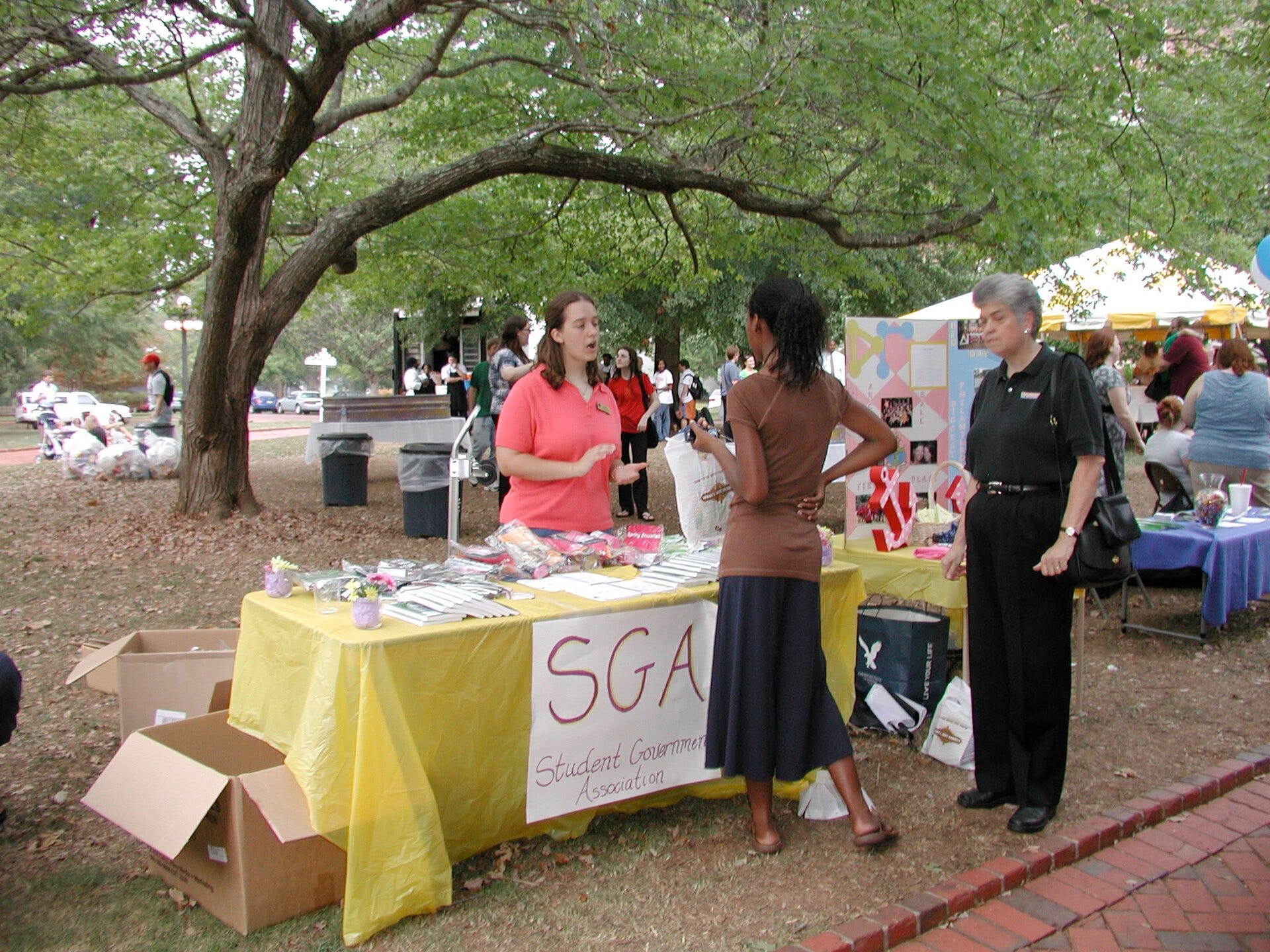
Walk onto almost any college campus in March or April and you’ll find the same ritual playing out: student government elections in which half the seats are uncontested, and the other half are dominated by whichever student club, fraternity, sorority, or pre-existing friend group got organized first. Ask a thoughtful, capable sophomore why they didn’t run for student senate and you’ll usually get some version of the same answer: it felt like a closed system, like the outcome was already decided before the race started; like running meant challenging a clique, not making a case to voters.
That’s not a student government problem. That’s a small-scale preview of what a lot of Americans believe about elections generally, and it’s worth taking seriously precisely because it’s small enough to fix.
I’ve spent years thinking about how to get more students into the habit of running, voting, and taking the mechanics of elections seriously. One idea keeps standing out: campuses should adopt Single Transferable Vote — STV — for electing their student governments. It’s not a hypothetical. A meaningful number of schools already use it, including Carnegie Mellon, UCLA, UC Berkeley, Vanderbilt, and Louisiana State, among others. The pitch to a skeptical student government isn’t “try something exotic.” It’s “you’re behind.”
.jpg)
Single Transferable Vote is a ranked-ballot system built for electing multiple people to one body at once, rather than one person to one office. Voters rank candidates in order of preference; candidates need to clear a set quota of votes to win a seat, and once they clear it, their surplus support flows to voters’ next choices instead of being wasted. Candidates who can’t win are eliminated and their votes transfer too. Some complain that STV is too complex for the typical voter to process, but we rank-order our preferences every day, whether it’s favorite bands, streaming shows, or foods.
Say that a candidate needs 100 votes to qualify to serve. Anyone who couldn’t get to that number after the transfer rounds would be eliminated, and the voters who put eliminated candidates first would have their next-highest preference votes go to another candidate who could still win.
The upshot is that a body elected under STV tends to reflect the actual range of student opinion in the room, instead of handing every seat to whichever bloc turns out its people first.
Capturing the breadth of students’ voices is what makes Single Transferable Vote useful for the candidacy problem specifically. In a winner-take-all student election, running against an entrenched group means betting everything on beating them outright — a discouraging proposition for a first-time candidate with no campaign infrastructure. Under STV, a student doesn’t need to out-organize the dominant clique to win a seat; they need to clear a quota that a fraction of the electorate can meet on its own. That lowers the real cost of entry.
Evidence from cities that use ranked choice voting suggests that more and better candidates emerge with ranked systems. A 2025 study in the American Journal of Political Science examined 273 cities that adopted ranked systems over three decades and found a real increase in the number of candidates running for office after adoption — though the effect faded in later election cycles because the novelty of a new system brings not only more serious candidates into the pool but some less than serious candidates as well. Fairly quickly, a smaller increase in the overall number of candidates stabilizes. That imperfection is a good reminder that voting methods are a structural nudge, not an ultimate fix. There are no voting systems where they can be installed and forgotten about; constant education and reminders are necessary.
The campuses already using Single Transferable Vote offer a useful lesson in structure. Most of them — Carnegie Mellon and UT Austin especially — apportion representation by academic college, at a fixed ratio of students to seats. Individual students then compete for their college’s seats under STV, with no party or clique label attached. UCLA is the interesting exception: its student government has real, functioning “slates” — coalitions like Bruins United, which formed in 2004 out of Greek organizations, religious student groups, and campus political clubs, and has dominated council elections for two decades. The UCLA example shows STV doesn’t automatically dissolve entrenched coalitions. Instead, ranked systems give an outsider a mathematical path to a seat at the decision-making table without having to beat the machine outright.
On the other hand, contrast that with what UC San Diego tried in the spring. Facing the same complaint — student elections feel closed and discouraging — UCSD’s student government rewrote its election code to ban candidates from coordinating with each other at all. The result: a candidate was disqualified for associating with other candidates, a free-speech watchdog group threatened legal action, and an op-ed in the campus newspaper argued the rewrite produced more uncontested races and less trust in the process. UCSD tried to fix a structural problem with a behavioral rule, and it appears to have made the discouragement worse. STV would instead change the math of how votes translate to seats, rather than police how students campaign or engage with each other.
As a civic educator, I’m drawn to another benefit of Single Transferable Vote systems: the moment a student has to rank candidates instead of picking just one, they’re forced to think — even briefly — about the fact that voting methods are a choice, not a law of nature. That’s a small dose of exactly the kind of thinking American democracy needs more of right now. We need an electorate that understands its institutions well enough to ask whether those institutions are serving the goals we actually want, instead of assuming the rules in front of them are the only rules there are. Students can get accustomed to STV in college, and then apply it in the political world beyond. The time has come.
Chapman Rackaway is the chair of the department of political science at Radford University in Virginia, and a scholar of democratic governance and civic architecture. He has participated in the AASCU American Democracy Project since 2003, chaired the Georgia Caucus of ADP institutions, served two terms as an ADP Civic Fellow, served on the ADP National Steering Committee, and co-produced the ADP Coordinators' Guide, a comprehensive resource that has helped new and restarting ADP chapters across the country build their own programs. At Radford, Chapman leads the Highlanders Vote program.