

When Civic Experiments Fail and Still Pay Off
From Andrew Doty: Lessons from My First Democracy Renovation Project
Andrew Doty is a strategy consultant and civic reform advisor based in Washington, DC. He advises the Ronald Reagan Presidential Foundation & Institute’s Center on Civility and Democracy, and has supported a range of democracy-focused organizations and political campaigns on institutional reform, coalition building, and cross-partisan trust.
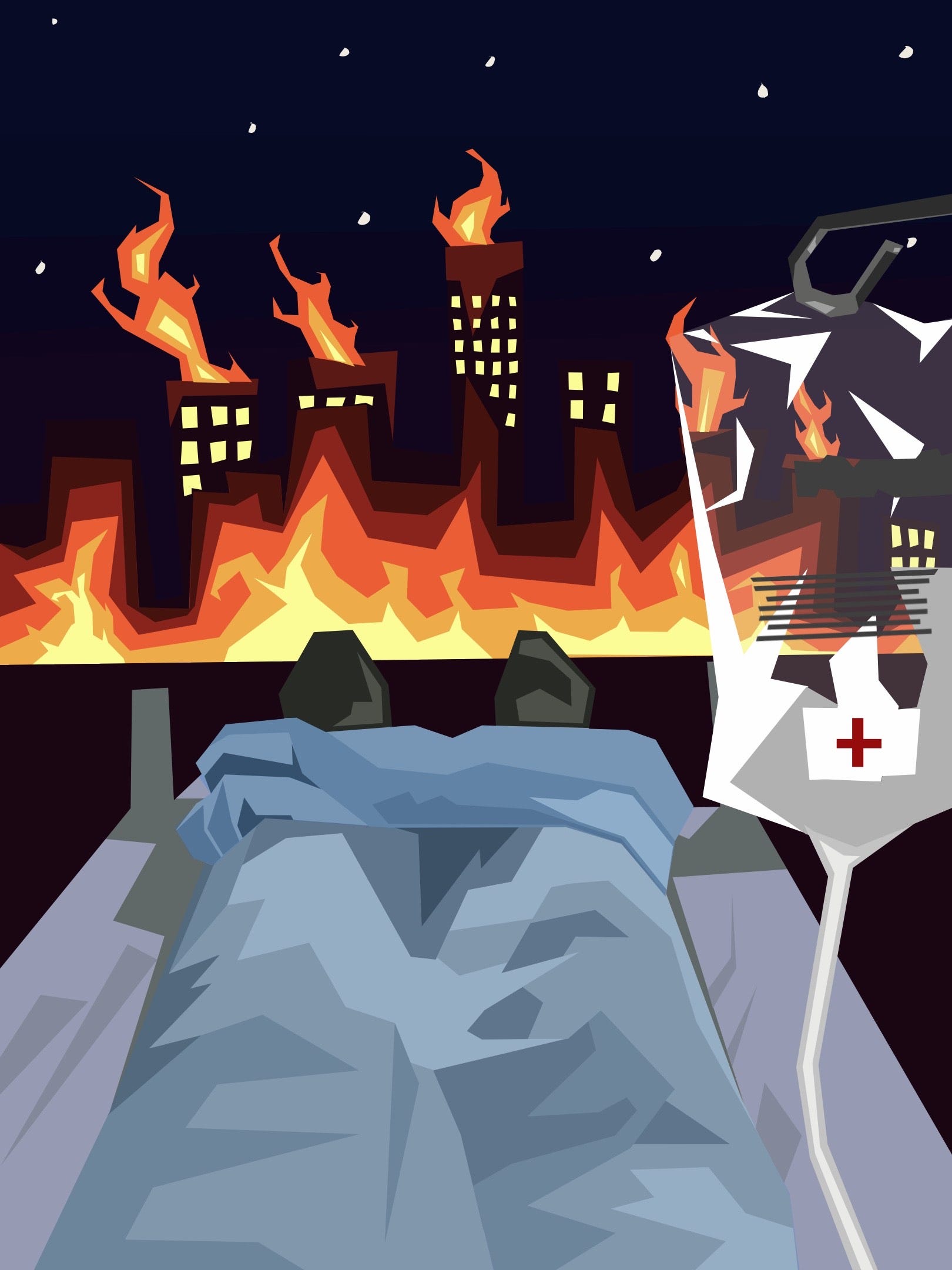
Lying on an IV drip, I thought: If I make it through this, maybe I can make a difference back home.
It was around the Fourth of July, 2015, and I’d been confined to a hospital bed in Kampala for nearly a week, stricken with malaria. As a missionary working with street kids, I’d seen resilient people struggle to build a national culture beyond tribal division and state institutions capable of providing services I once took for granted.
Watching divides grow in the U.S., I sensed my own country wasn’t as far from those conditions as I had once imagined. Our divides were partisan rather than tribal, but the symptoms were similar: Collapsing social trust, bitter factionalism, and declining confidence in democratic institutions.
I recovered and returned to Arizona, determined to understand what was fracturing American civic life and to find solutions.
The Experiment Begins
An opportunity came early in 2017 when my pastor approached me: “Andrew, we have Republicans, Democrats, and independents in our church, and I’m hearing similar things from all of them. They’re frustrated with politics and want a better way to engage.”
With his encouragement, I teamed up with two peers from different political parties to launch an experiment in Phoenix’s East Valley. Though we had each been hearing similar frustrations from our networks, we didn’t have the language to understand them and weren’t sure they could be politically activated. So over the course of five months, we facilitated focus groups with nearly 50 people across party lines, racial backgrounds, and faith communities.
Some participants consumed the news daily but had never attended a political event, always waiting for “more information” before stepping into the arena. Others followed national politics only loosely but knew several of their elected officials personally.
All shared the same dismay: Politics was rewarding behavior that would never be tolerated elsewhere. Dishonesty, disrespect, self-aggrandizement, and wildly misrepresenting others’ views were becoming the new normal.
The question became: How can we make our politics healthier?
Building a Platform
We landed on a simple yet ambitious idea: Form a politically and demographically diverse board to endorse three candidates based on their commitment to fundamental human values like honesty and humility. One Republican, one Democrat, one independent. In local races where the partisan outcome of the general election wasn’t in question, we would mobilize 100 volunteer hours for each.
Through our conversations, we identified five “pre-political values” as the basis of more trustworthy political representation. We defined them evocatively: “Honesty” meant “saying what you believed to be true, even when it could cost you.” “Humility” became “believing the person you are disagreeing with might be right.” The endorsees would be chosen based on their answers to an open-ended questionnaire about how they lived them out professionally.
The point wasn’t moderation. We believed people of goodwill existed across the spectrum: Tea Party libertarians, progressive activists, heterodox independents, and moderates alike.
And though our Christian faith gave us the trust to work across differences, we insisted that the project itself be nonreligious. The values were rooted in faith but broad enough for anyone to embrace—what C.S. Lewis called the “Tao”.
Peak and Pivot
Momentum peaked in August 2017 when we were invited to Washington, D.C., to give feedback on the Center for Public Justice’s Political Discipleship Guide.
The nonpartisan curriculum guided politically diverse small groups in practicing active citizenship as a spiritual discipline, reflecting together on their personal journeys toward their political beliefs, and meeting with a local elected official.
For me, the trip was life-changing. As a state university graduate with a background in social services and entirely local aspirations, I’d never imagined contributing to a national civic program in the nation’s capital. The invitation validated the work we had done and was a turning point in my career.
But afterwards, we learned a hard truth: Eagerness to talk about politics doesn’t always translate into action. Recruiting volunteers for our own project was more complicated than recruiting for the traditional political campaigns we had each organized previously. As our lives filled with marriages, job changes, and graduate school, momentum slowed. After careful deliberation and reflection, we pivoted: The Arizona focus groups would serve as a standalone exploration, and we would close the effort while applying its lessons to our own lives.
The Real Payoff
Years later, one co-founder, now a close friend, was asking my advice on his plans to run for elected office during one of our regular phone calls. He told me that, looking back, he regarded our project as a failure.
I disagreed.
Those focus groups? We gave people time and space to reflect on what they wanted for civic life. More than one of us even changed our party registration because of them.
That trip to D.C.? It convinced me I could make a career in political reform in Washington, where I now live and serve as an advisor to the Ronald Reagan Presidential Foundation & Institute’s Center on Civility and Democracy. That workshop was where I met my wife.
The civic curriculum we helped shape? It’s since been used by faith communities in over 15 cities.
Several of us who participated in that effort are now contributing to healthier politics in even more significant ways. In these challenging times, we are anchored by those early experiments. They have helped us keep the faith, a faith I hope many more Americans will find by pursuing their own civic experiments.
Advice for the Next Renovators
If you’re thinking about a civic experiment of your own, here’s what I’d recommend:
Start where you are. You don’t need permission. Even small-scale pilots can influence national conversations.
Plan for limits. Money, time, and volunteer energy are real constraints; anticipate them early.
Know your audience. Define and understand your early adopters, or you won’t sustain momentum.
Lift others’ aspirations. Encouragement and unexpected invitations can raise people’s sights beyond what they imagined.
Understand that information ≠ action. News junkies aren’t always the most engaged citizens; reflection doesn’t automatically translate into civic action, and providing more information alone doesn’t close that gap.
Find a team. Your work is only as strong as the relationships sustaining it.
Draw on nonpolitical communities. Engaging nonpartisan church communities gave us access to human trust and ethics that politics cannot supply. But protecting that trust means refusing to turn these communities into partisan vehicles.
Give hope a chance. Yes, this is sentimental. Nothing moves without it.
I can’t promise your project will unfold as planned. You won’t transform America’s political culture overnight. But you may change your community, your relationships, and even your own future.
That’s how democracy is renovated—one experiment at a time.