

What Rethinking Work and Renovating Democracy Have in Common
To empower workers, start by rethinking job requirements and reimagining entire categories of work.

Molly Kinder, a Brookings Institution expert on artificial intelligence and the future of work, wrote a powerful piece last spring describing Pope Francis as an “unexpected visionary” on how to develop AI to maximize our humanity. Drawing on the deep Catholic tradition of understanding work as “the foundation of how we care for families, cultivate our gifts, and build lives of dignity and purpose,” Pope Francis called for a future in which AI designers focus most on how to help the “least of us.”
Building on that foundation, Kinder asks: “What if AI could equip even the least-skilled workers with a ‘genius in their pocket’ — an on-demand coach, world-class expert, and guide to help master new skills, expand their roles, and pursue opportunities once reserved for the privileged few?” I would add, what if workers could use AI to do those things in a vastly expanded range of jobs?
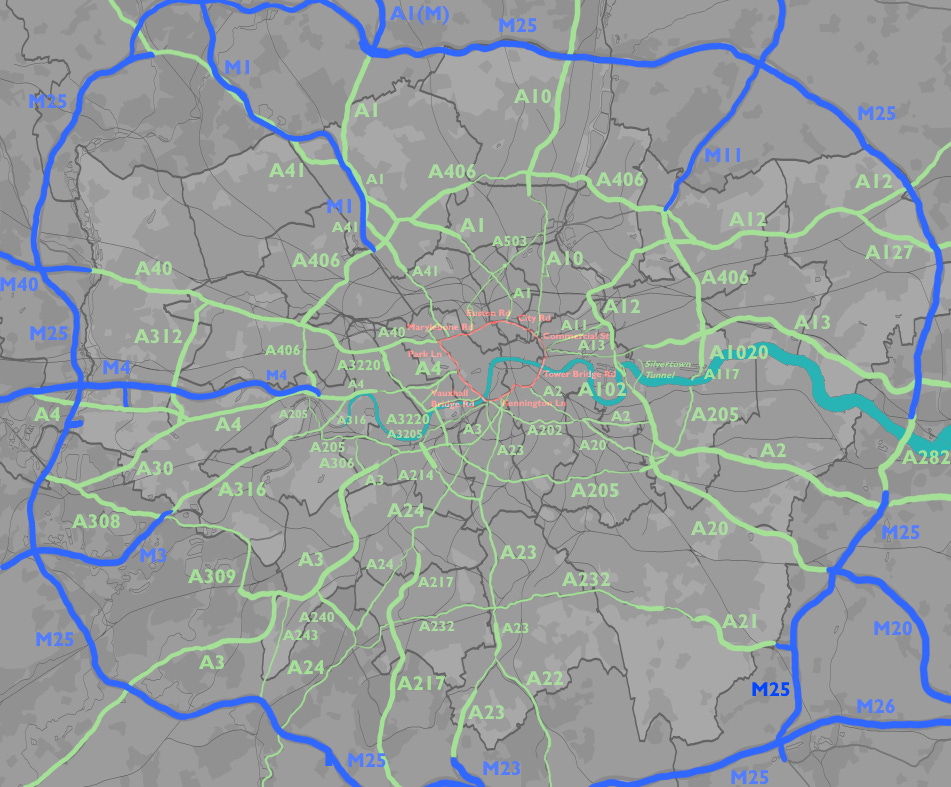
I was in London recently and took a Black Cab from my hotel to the train station. Uber operates in London, but the cabs are still predominant. My cabbie explained that the chief reason is “the knowledge” — the vast amount of learning required to be able to navigate anywhere, without digital assistance, within a six-mile radius of Charing Cross Station. He said that after a first career as a butcher, it had taken him three years to learn the over 25,000 streets and thousands more points of interest necessary for him to get a taxi license, but that it was entirely worth it to have the freedom to be his own boss, owning his cab and choosing his hours.
As I reflected on our conversation, it struck me that it took my cabbie as long to learn his professional body of knowledge, before taking his licensing exam, as it took me to acquire a law degree (my professional body of knowledge) before taking a bar exam. I suspect his was the harder task.

He was a knower. As a professional pedant (i.e. an academic deeply attached to words who is persnickety about their usage – just ask my sons!), I often rail against the replacement of a perfectly good word with a clunky alternative. Thus when I first ran across “learnings” and “learners,” both of which are rampant in corporate-speak, I kept wondering what on earth was wrong with “lessons” and “students”? Then I heard Laurie Patton, president of the American Academy of Arts and Sciences, use the term “knowers.” The Academy falls into the category of a “learned society,” whose members “discover and advance knowledge” and “apply knowledge to the problems of society.” The majority of its members are scholars, professors, scientists, doctors, and leaders with advanced degrees. Yet Patton chose the much broader term of “knowers”: people who know things, however they acquired that knowledge.
“Knowers,” I realized, may have been learners without ever having been students; they may have learned things never set forth as lessons. That category expansion, broadening a skill or status beyond a title conferred on the completion of a prescribed course of education in a recognized institution, opens the door to building a new, more flexible, and more accomplished workforce, one which the nation badly needs.
Opportunity@Work, on whose board I sit, is an organization dedicated to creating “a labor market where all skills can shine” by substituting performance for pedigree. Its “Tear the Paper Ceiling” campaign has helped convince 26 states to remove the requirement of a college degree from a host of jobs and recruited scores of companies to the cause. In Opportunity@Work’s parlance, jobseekers without a traditional pedigree are “STARs” -- workers “Skilled Through Alternative Routes.”
Skills-based hiring has been gaining steam for over a decade. LinkedIn has pioneered the listing of skills as job qualifications in addition to previous positions, insisting that in a time of accelerating change this is the best way to “prepare the workforce for the jobs of the future” and to “match talent to opportunity” more efficiently and equitably. Businesses like Vervoe, an AI platform for hiring, offer detailed advice on how to transform a qualifications-based job description into a skills-based one, replacing a BA in a specific field and years of experience in a specific job with the ability to “work under pressure and to tight deadlines,” “strong organizational and multitasking skills,” and other skills necessary for the job being advertised.
For centuries of human history, the primary way of learning a job was to watch someone else do it, then try your hand as an apprentice or beginner. Tearing the paper ceiling does not mean dismissing the value of education, particularly the kind of education that opens doors to new worlds and teaches students how to teach themselves over their lifetimes. It does mean challenging many of our assumptions about how a particular credential actually relates to what a given job requires.
We could go even further, describing ourselves and others in terms of our skills rather than our job titles. “Knowers” could include a wide range of jobs that require accumulating and expanding knowledge, from collecting field samples of animal behavior to exploring a foreign culture to examining the mechanics of cooperation and conflict. “Teachers” could include a wide range of jobs that require the effective dissemination of knowledge, skills, habits, and traits of character, from first grade to carpentry to quantum mechanics. “Executives” could include all jobs requiring the execution of tasks, from organizing an event to running a complex organization.
This reimagining of core elements of our society and economy is a big part of renovating democracy. In part, reimagining work in ways that open up existing hierarchies and offer transferable skills restores agency and power to many members of the demos. Moreover, we are also renovating what democracy means. We are focusing not on “voters” and “politicians” as the key democratic players, but on “engaged citizens” who can participate in self-government in many different ways, bringing their own skills, experiences, and perspectives to bear. In civic education, likewise, we talk about “civic skills” and the need for students to learn through experience.
We can also shift citizen mindsets from rule-takers to rule-makers. Politics, like markets, are shaped by a set of rules that the people decide: qualifications for office, requirements for forming parties and running campaigns, and how we finance elections. We constitute ourselves as a polity with a set of basic rules – in many countries the constitution is referred to as the “Basic Law,” which then determines how we make other rules. Think of it like sports, where the basic rules of the game are laid down, along with a process and a designated body for changing those rules. Changing constitutions is hard, but changing most of our political rules is no different than changing any other regulations or legislation.
To empower ourselves as citizens, just as we empower ourselves as workers, we need to reimagine what is possible, change our mindset, invent new language, and change the rules.
Absolutely! And let's not forget young people, too!!
https://open.substack.com/pub/jaygillen/p/a-constitutional-way-to-grow-up?utm_source=share&utm_medium=android&r=nkont
If I am following the argument in this piece, Ann-Marie Slaughter is suggesting a different language for naming the roles citizens play in society: "knowers", "teachers", "executives". The underlying concept seems to suggest that there is less hierarchy and more agency in this renaming. Removing obstacles to bringing learned skills to the market, without the traditional gate keeping of certifications and certifiers expands the opportunities for non-traditional learners to participate. This also would open up participation in rule-making in political life. Am I getting that right?