

The IRS Slush Fund Is a Test. Too Many Republicans Are Failing It.
The coming reckoning that Congress needs to think about.

President Donald Trump’s IRS slush fund presents Republicans in Congress with a stark choice. Those who stand up to the administration’s escalating corruption risk the president’s revenge, as Rep. Thomas Massie (R-Kentucky) and Sen. Bill Cassidy (R-Louisiana) recently learned.
But legislative complicity in corruption risks its own reckoning.
And it’s not a choice Congress can duck: It would be a serious mistake to treat the Justice Department’s vague statements and the rumors coming from the White House this week as a final decision to drop the corrupt project — especially in the absence of a final court order on the matter. In the 1990s in Peru, where I grew up, President Alberto Fujimori built a vast corrupt network, buying off judges, legislators and the press with stolen government money. For years, few people looked closely, but prosecutors eventually built cases against more than 1,500 members of his network, including legislators who took bribes. I was in the courtroom in 2009 when a Supreme Court panel sentenced Fujimori to 25 years for corruption and crimes against humanity.
In Colombia, brutal paramilitary groups built close ties to members of Congress through widespread electoral fraud in the early 2000s. Within a few years, journalists exposed what had happened in what became known as the “parapolitics scandal,” and a Supreme Court investigator initiated criminal cases that ultimately landed dozens of members of Congress in prison.
In each case, the network looked invulnerable — until it didn’t. Not everyone who got swept up had taken cash, but all of them aided, covered up or benefited politically from the corruption. Evidence emerged, brave individuals pursued it, and accountability extended well beyond the person at the top.
Most congressional Republicans have spent the past 17 months enabling the president’s power grab: Funding it, confirming his appointees, refusing oversight. They have allowed Trump to operate as though he’s above the law, so it’s no surprise that Trump’s actions are growing ever more brazen.
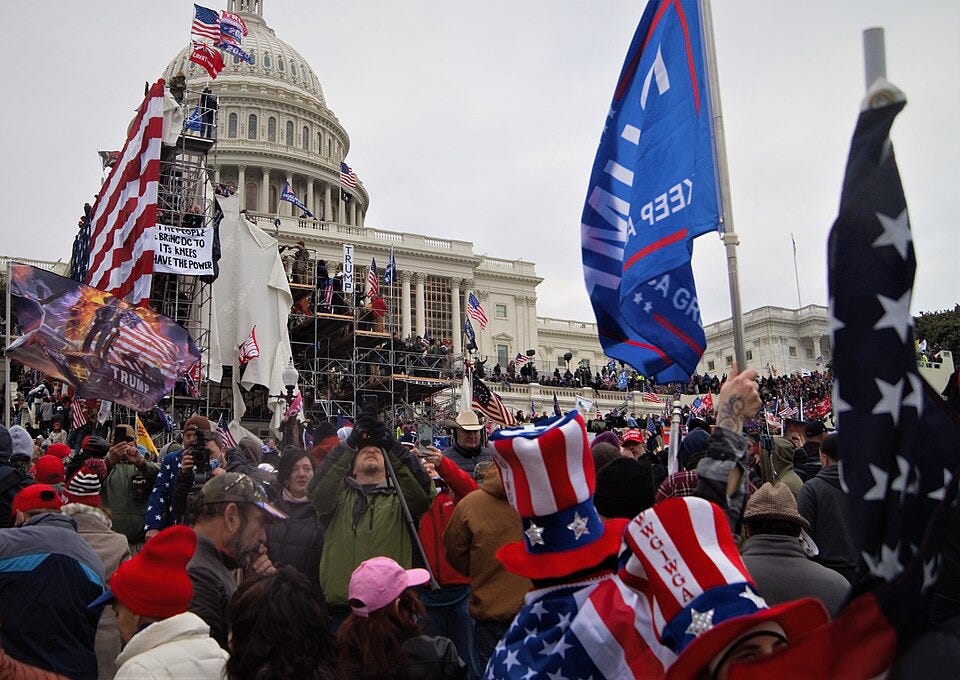
On May 18, acting Attorney General Todd Blanche announced that Trump had entered a “settlement agreement” in a lawsuit against the IRS — an agency that Trump controls — right before a judge could rule on whether the suit was legitimate. The settlement includes permanent protection for Trump’s family from IRS audits, and the Justice Department establishing a $1.776 billion fund for “victims of weaponization” — presumably Trump allies and Jan. 6 insurrectionists — to be administered by a commission under Trump’s control. American taxpayers will foot the bill.
Whether or not it meets the legal definition of a crime, the settlement is corrupt: The misuse of public power for private gain.
And for several Senate Republicans, the IRS slush fund seems to have crossed a line. North Carolina’s Thom Tillis decried the fact that the fund could “compensate people who assaulted Capitol Police officers.” Kentucky’s Mitch McConnell called it “utterly stupid, morally wrong.” Senate Majority Leader John Thune (South Dakota) said he’s “not a big fan.” In an unusual display of Republican resistance to the White House, Republicans left the Senate before recess without advancing priority legislation.
.jpg)
The story has been different in the House. Speaker Mike Johnson (Louisiana) and other Republican representatives expressed support for the fund. Pennsylvania Rep. Brian Fitzpatrick has drafted bipartisan legislation with New York Democrat Tom Suozzi to kill it, but in the Appropriations Committee, Republicans voted down an amendment that would have done one narrow thing: Bar elected officials from collecting from the fund.
Disturbingly, as former Justice Department pardons attorney Liz Oyer has pointed out, Blanche has made clear that at least some senators could benefit from the slush fund because their phone records were subpoenaed in the special counsel investigation into attempts to overturn the 2020 election.
Any members of Congress poised to enable or profit from the slush fund should not get too comfortable.
On Friday, Judge Kathleen Williams of the Southern District of Florida, who had originally overseen Trump’s suit, reopened the case at the request of 35 former federal judges. The key question she’s looking into: Was the settlement “a product of collusion and … a fraud on the Court”?
Collusion. Fraud. Corruption. I’ve seen and used these words to describe other governments effectively captured by mob bosses and organized crime. It’s the right language for what is happening in the United States today. And anyone who enables this fund becomes a party to it.
The current Justice Department will not investigate itself, of course. But state and local prosecutors retain independent jurisdiction, and a future Justice Department should prioritize looking back.
And even if they don’t cross the line of criminality, members of Congress will find it hard to escape political and historical accountability. Americans despise corruption, and polling indicates widespread, cross-partisan opposition to the fund. Those who enable such brazen self-dealing will carry that fact into every future campaign, confirmation hearing, and page of history written about this period. A new majority in Congress after the midterms could do a great deal to investigate, uncover evidence, impeach, censure and expel.
Payouts under the fund have been temporarily enjoined pursuant to a lawsuit, and the Justice Department issued an unusual statement June 1 saying it would respect the injunction. Meanwhile, sources close to the White House have said Trump is thinking of scrapping the fund — which shows Congress can influence the president, if it chooses to do so. But Kennedy put it plainly: “Saying you’re going to follow a court order doesn’t tell me anything. You have to follow the court order.”
It would be a mistake to treat the Justice Department’s vague statements and the rumors coming from the White House as a final decision to drop the corrupt project.he Republican majority in Congress cannot hide from its duty.
They can stand with taxpayers, the Constitution, and the rule of law by taking unequivocal action to stop this corruption now. Or they can make themselves part of a corrupt network.
Either way, history will not forget.
 | A guest post by
|