

Shutdown Ripple Effects, Food Insecurity, and Idaho’s Very Own DOGE
Democracy in the States' weekly round-up of news, campaigns, policy changes, obstacles and successes for democracy renovation at the state level.

It’s Friday night, October 24, 2025. The federal shutdown is still dragging on, putting pressure on state resources and forcing governors, mayors, and nonprofits to jump in and fill the gaps. If you didn’t know just how interconnected our federal and state governments are, this week made it pretty clear, from nutrition aid and Medicaid to Idaho’s very own DOGE. And, on that note, here’s your Democracy in the States: Weekly Round-up.
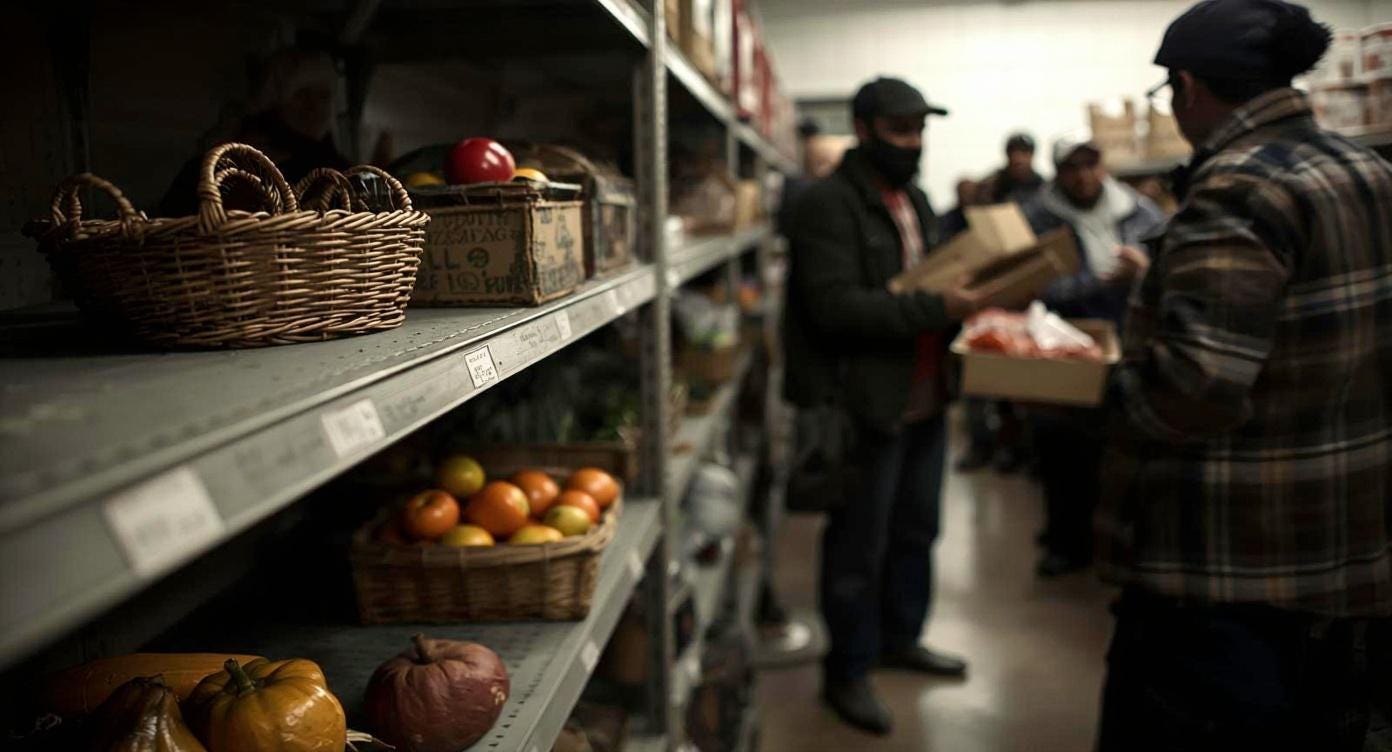
Food insecurity now dominates state headlines
As the shutdown drags on, hunger has emerged as its sharpest consequence. Late Friday, the USDA reversed its earlier stance, announcing it will not reshuffle funds to extend November SNAP benefits for the nearly 42 million people who rely on the aid program (News From The States). Joel Berg, CEO of Hunger Free America, told The Guardian that “we will have the greatest hunger catastrophe in America since the Great Depression,” if funding runs out.
Now, with SNAP funding frozen, state governments, vulnerable residents, and local food banks are scrambling to avert food crises.
UTAH: Residents describe a “hopeless” outlook as SNAP pauses, with local charities warning they can’t sustain the need much longer. (Utah News Dispatch)
NEW MEXICO: Food banks say they had no time to prepare for a Nov. 1 cutoff and are already running out of supplies. (Source NM)
ALASKA: More than 66,000 residents could lose food assistance within weeks if the shutdown persists. (Alaska Beacon)
MONTANA: The state’s public health agency confirmed federal orders to stop SNAP distributions altogether. (Daily Montanan)
WEST VIRGINIA: Elderly residents who rely on food aid to feed themselves and their grandchildren say they’re “very scared.” (West Virginia Watch)
MICHIGAN: Lawmakers and advocates are meeting to coordinate a statewide response as recipients brace for missed benefits. (Michigan Advance)
States step in to fill the gaps
With federal support drying up, some states are dipping into their own reserves to prevent families from going hungry.
NEW HAMPSHIRE: Officials rolled out a contingency plan to keep SNAP operating during the shutdown. (New Hampshire Bulletin)
LOUISIANA: The state pledged $150 million per month in emergency funds to sustain benefits while federal programs are frozen. (Louisiana Illuminator)
GEORGIA: Administrators are seeking at least $60 million to keep food assistance programs running. (Georgia Recorder)
Tracking hunger is getting harder
Even as need grows, the data tools states rely on to measure food insecurity are disappearing, leaving them to fight blind.
KENTUCKY: Surveys are helping quantify need as Gov. Andy Beshear delivers a $9 million bridge for senior meals. (Kentucky Lantern)
MAINE: Researchers warn the USDA is “hiding the evidence” by canceling a key food-security survey that states use to target aid. (Maine Morning Star)
Health data and Medicaid funding fall into uncertainty
The shutdown is affecting more than just hunger. States across the country are losing access to federal health data and may face Medicaid funding gaps. These problems could delay treatment, hurt hospitals, and put lives at risk. Many states have already stopped some disease tracking and maternal health monitoring.
WEST VIRGINIA: Federal stopgaps won’t cover Medicaid losses for struggling hospitals. (West Virginia Watch)
NORTH CAROLINA (hospitals): Providers warn that billions in community benefits are at risk as Medicaid cuts deepen. (NC Newsline)
TEXAS: The feds slashed ACA navigator funds that helped 65,000 Texans enroll in health coverage. (Texas Tribune)
NORTH CAROLINA (policy): Lawmakers left Raleigh with a new map but no state budget — and no plan to fix Medicaid rates. (NC Newsline)
VIRGINIA: Nonprofits and patients are coping with the sudden loss of HIV/AIDS program funding. (Virginia Mercury)
One year to the midterms: redistricting and representation
As the 2026 midterms approach, redistricting is reshaping the political landscape once again. All eyes are on Louisiana, where lawmakers are anticipating a Supreme Court decision on Callais v. Louisiana before the end of the year that could force the state to redraw its congressional map. During this week’s special session on election laws, Republican lawmakers are considering moving the 2026 primary back a month to draw new boundaries. (Louisiana Illuminator).
Redistricting fights continue elsewhere
From Richmond to Raleigh, debates over political maps are still going on, even though some efforts have slowed down.
VIRGINIA: Lawmakers were called back to Richmond amid talk of a new map fight. (Virginia Mercury)
OHIO: Democrats proposed a new congressional map; GOP commissioners shrugged. (Ohio Capital Journal)
INDIANA: Senate GOP leaders admitted they don’t have the votes for a mid-decade redraw. (Indiana Capital Chronicle)
NORTH CAROLINA: Lawmakers approved a map expected to give the GOP 11 of 14 seats. (NC Newsline)
UTAH: Plaintiffs’ experts called the state’s legislative map an “extreme partisan outlier.” (Utah News Dispatch)
COLORADO: Attorney General Phil Weiser endorsed emergency redistricting reforms to counter mid-cycle gerrymanders. (Colorado Newsline)
Voting access and ballot measures draw new lines of conflict
As voting maps change, debates about who can vote and how they can do it are also taking place across the states.
GEORGIA: Lawmakers will revisit whether to exit ERIC, the multistate voter-roll data compact. (Georgia Recorder)
KANSAS: Voting restrictions in Kansas and 15 other states are nearing their 2021 levels. (Kansas Reflector)
ARKANSAS: A judge ruled a June 2026 special election date violated voters’ constitutional rights. (Arkansas Advocate)
MONTANA: Hundreds of ballots were rejected for missing the newly required birth-year notation. (Daily Montanan)
Meanwhile, citizens are advancing ballot initiatives to assert more control over their political systems.
OREGON: A multipartisan coalition launched a 2026 ballot initiative to open primaries to all voters. (Oregon Capital Chronicle)
ARKANSAS: University students filed an initiative to safeguard natural resources. (Arkansas Advocate)
MISSOURI: A lawsuit challenges a proposal to make constitutional amendments harder to pass. (Missouri Independent)
Immigration enforcement and local pushback
The administration’s immigration crackdown continued this week, with new enforcement actions, lawsuits, and local resistance shaping the national picture.
WISCONSIN: Dodge County’s sheriff is transporting migrants to a controversial ICE facility near Chicago. (Wisconsin Examiner)
WEST VIRGINIA: State police and ICE arrested 18 people over Bridge Day weekend. (West Virginia Watch)
IDAHO: The FBI clarified that no “young” children were zip-tied during a recent raid, after initially denying the incident. (Idaho Capital Sun)
FLORIDA: A new bill would let families sue for killings by undocumented immigrants and fine police that refuse to cooperate with ICE. (Florida Phoenix)
TENNESSEE: Officials offered few details about arrests or costs from Memphis’s new Safe Task Force. (Tennessee Lookout)
In other areas, communities are coming together to push back against these policies.
MAINE (Wells): Local police canceled their ICE contract after community protests. (Maine Morning Star)
NEBRASKA: Families separated by detention are expanding outreach to ICE detainees. (Nebraska Examiner)
MAINE (statewide): Immigrant-rights groups launched a statewide ICE-watch hotline. (Maine Morning Star)
Courts and the limits of executive power
This week also saw the judiciary weigh in on federal authority and appointment powers.
NATIONAL: Every state with a Democratic governor or AG joined an amicus brief urging the Supreme Court to uphold limits on the president’s ability to federalize the National Guard, backing Illinois and Chicago’s challenge to Trump’s deployment plan. (News From The States)
NEW JERSEY: The DOJ defended Trump’s power to appoint U.S. attorneys without Senate approval, a case that could redefine executive appointment powers. (New Jersey Monitor)
Interstate tensions and state-level surveillance debates
From state borders to city streets, questions about state sovereignty and privacy continued to escalate.
ILLINOIS/INDIANA: An Indiana-only “Boundary Adjustment Commission” met to explore absorbing Illinois counties amid secession chatter. (Indiana Capital Chronicle)
OREGON: The ACLU sued Eugene for access to data on Flock license-plate readers, citing civil-rights concerns. (Oregon Capital Chronicle)
COLORADO: Hundreds of residents at a Denver town hall opposed renewing a Flock camera contract. (Colorado Newsline)
NEBRASKA/COLORADO: Colorado urged the Supreme Court to reject Nebraska’s lawsuit over the South Platte River compact. (Nebraska Examiner)
A final policy development to follow
In Idaho, the state’s Division of Government Efficiency a.k.a. DOGE is preparing sweeping recommendations to consolidate or eliminate state agencies. The move could reshape Idaho’s bureaucracy and test how far efficiency mandates can go before they become political flashpoints. (Idaho Capital Sun)
In case you missed it …
“Building Hope,” By Anne-Marie Slaughter, The Renovator, Oct. 23, 2025
“No Kings. Save Congress.” By Danielle Allen, The Renovator, Oct. 21, 2025
“Democratic Capitalism Doesn’t Work Without Democracy,” By Malcolm Salter, The Renovator, Oct. 18, 2025