

Mamdani's Bold Experiment in Participatory Democracy
NYC's mayor seems to be trying to achieve what Barack Obama never could: turning his campaign movement into a de facto arm of his government

Zohran Mamdani has signaled that he means business about participatory democracy. On his second day as mayor he announced that Tascha van Auken, who built his 100,000-strong movement of campaign volunteers, will head a new Office of Mass Engagement designed to draft residents into decision-making and solicit feedback on government services and city programs.
So what is “mass engagement”? So far the only official word on what the OME will actually do is help several city departments hold “rental ripoff” hearings to vent about their landlords. But Mamdani’s bigger ambition appears to be to succeed where Barack Obama failed, and turn the mass movement that helped elect him into an engine of his government—a failure that, some argue, crippled Obama’s policy agenda and sowed the seed for the rise of Donald Trump. Some of Mamdani’s supporters describe his vision as a new paradigm of democratization: “Mass governance.”
Obama’s missed opportunity
For context, cast your mind back to 2008. Remember mybarackobama.com, or MyBO? It was the organizing and social media platform, created by Facebook co-founder Chris Hughes, that by election day boasted two million user profiles. That platform was just the online face of a mass grassroots movement of local organizers and volunteers who raised $500 million in mostly small donations from over 6 million people.
As Micah Sifry detailed in a 2017 article for the New Republic, some of Obama’s top advisers had plans for turning that volunteer force into a “Movement 2.0” to support Obama’s agenda once in office—first by giving citizens a say in shaping policy, then by mobilizing them against the powerful lobbies and recalcitrant lawmakers who would inevitably put up fights.
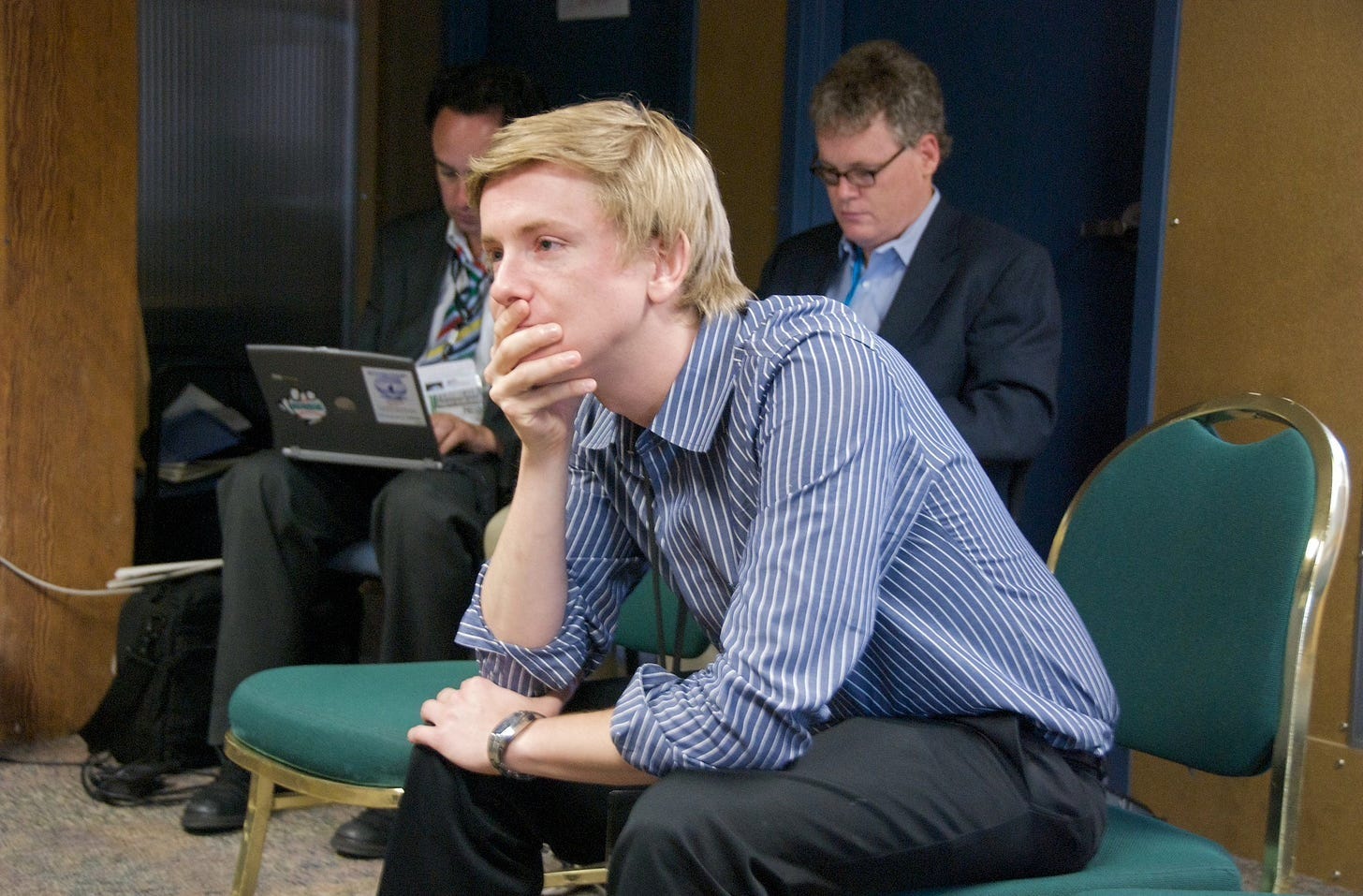
But the idea ran into quicksand as soon as people close to the Democratic National Committee got wind of it. Party insiders hated the idea of a parallel structure they couldn’t control. So did Rahm Emanuel, Obama’s hard-charging chief of staff, who evidently preferred “twist[ing] arms on Capitol Hill” to herding feisty activists. Obama himself—who, Sifry writes, may not even have known of the plan his underlings had hatched—made an earnest plea to his campaign manager, David Plouffe, to “make sure you find time to help figure out how to keep our supporters involved”—but that was when the campaign was over and Plouffe was already out the door. Movement 2.0, now branded Organizing for America, was tucked into the DNC and gradually asphyxiated.
That, Sifry argues, was “the seminal mistake of the Obama presidency.” Democrats lost touch with their base, particularly in the crucial flyover states. When the battles came, most notably over healthcare, the progressive movement had withered and an energetic conservative grassroots, the Tea Party, had taken its place.
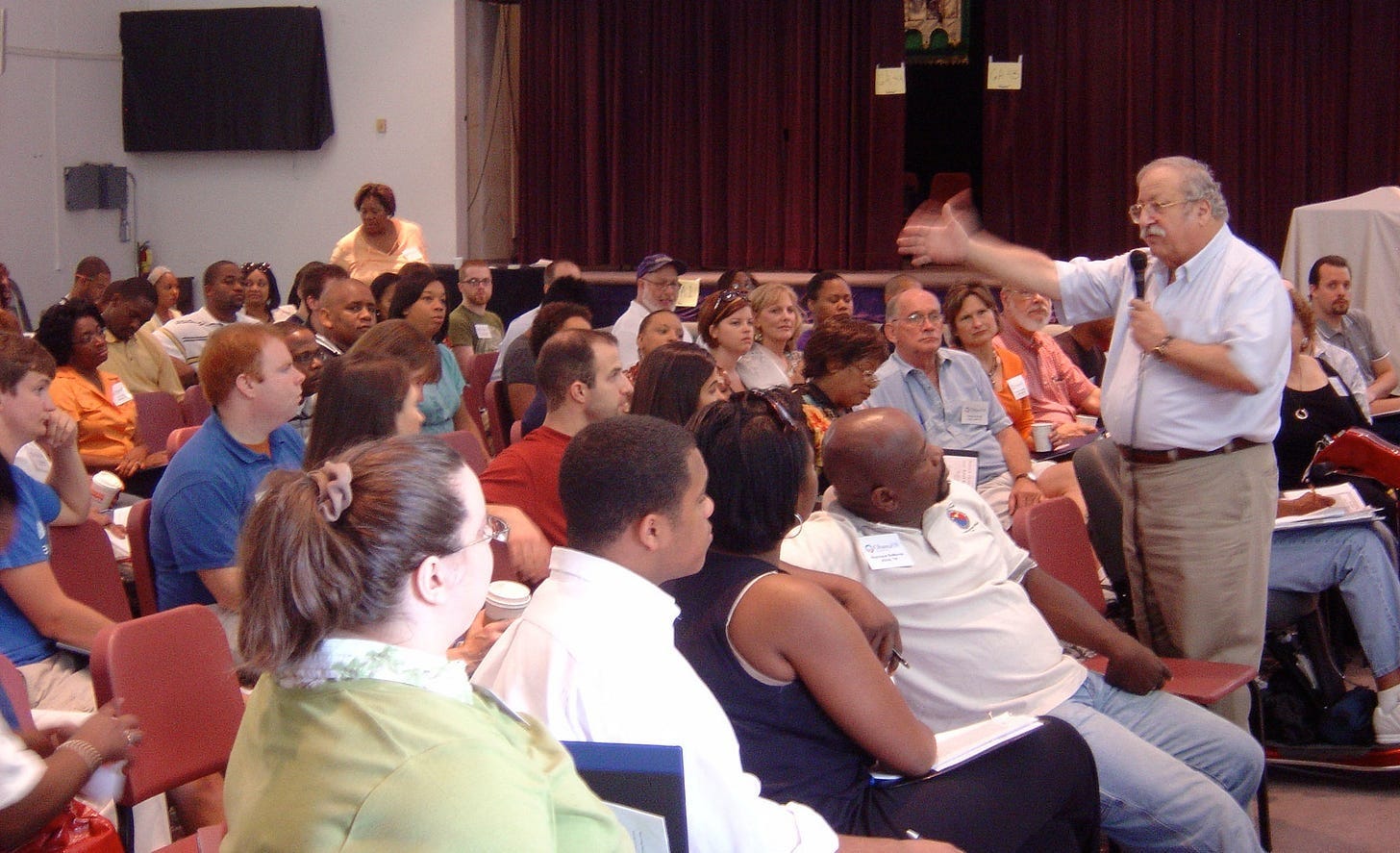
But at least one person was able to carry that bitter lesson directly from Obama’s campaign to Mamdani’s. Marshall Ganz, a Harvard professor and legendary political organizer who helped train many of Obama’s grassroots organizers, spent some time last summer advising the Mamdani team. “A lot of the discussion was about… how to avoid the Obama trap,” he said. And in his telling, he didn’t need to offer much advice, because the campaign already “had it right.”
Democratic socialism and “mass governance”
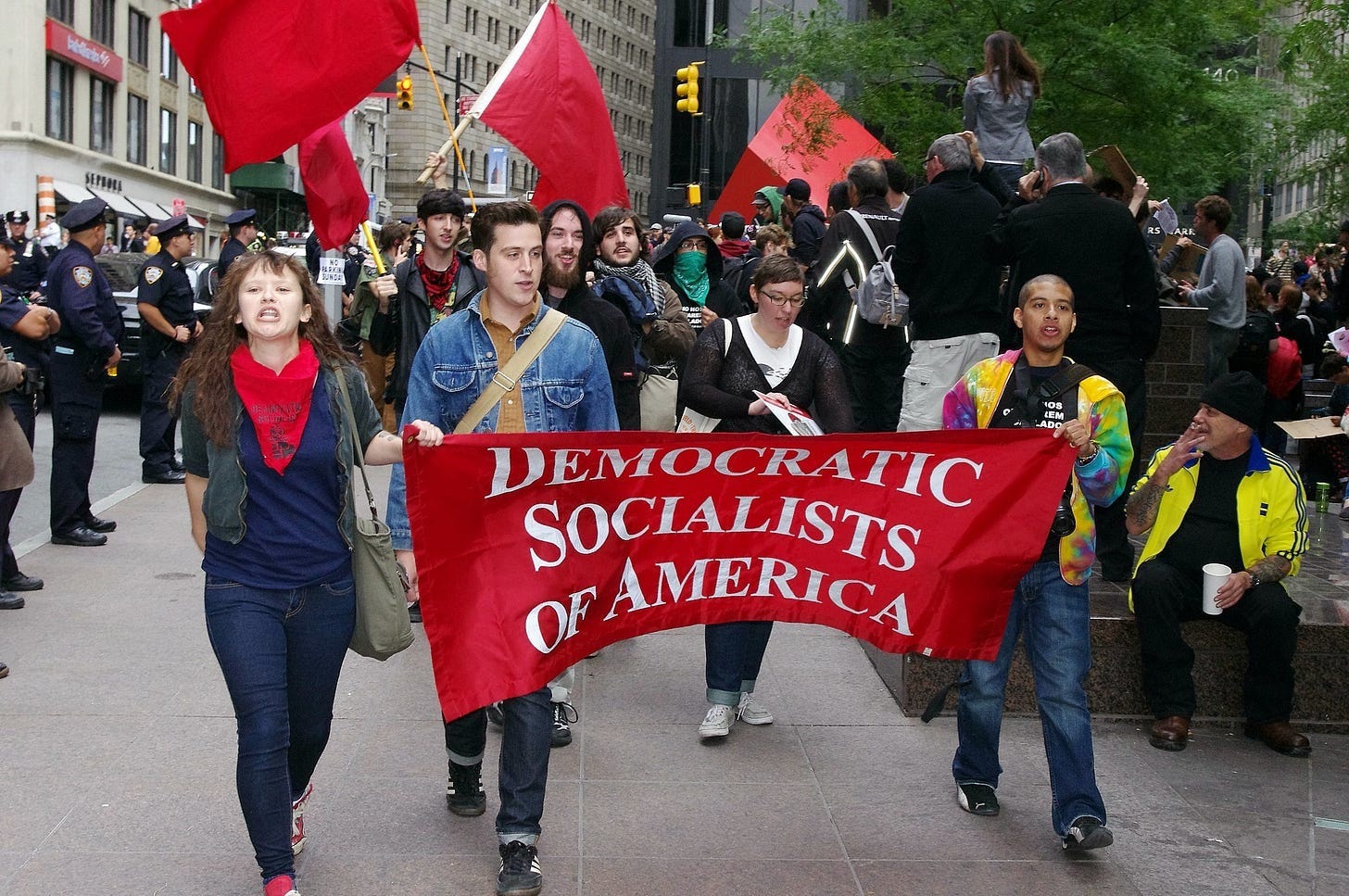
So what does getting it right look like? A piece in Jacobin by two people who advised the Mamdani campaign sketches out a possible vision. The authors are Sumathy Kumar, a former co-chair of the NYC chapter of the Democratic Socialists of America (DSA, of which Mamdani has been a member since 2017), and Gianpaolo Baiocchi, an expert in participatory democracy at New York University—both of whom served on one of Mamdani’s “transition committees” devoted to community organizing.
The authors don’t speak for Mamdani, and it’s unclear how closely their ideas hew to Mamdani’s actual plans; neither agreed to be interviewed for this article. Either way, what it outlines is a fairly radical form of politics-as-government, at least for today’s America.
Typically, Kumar and Baiocchi point out, once a Democrat leader is sworn in, progressive groups influence them either via small, closed-door meetings with community leaders or via public “feet-to-the-fire” activism to keep the incumbent honest. The former, they argue, is exclusionary; the latter antagonistic. “[W]e have to think differently now: we have elected one of our own,” they write.
Instead, they say, Mamdani and his base should work in concert—a style they call “mass governance.” That echoes comments by van Auken in a December interview, where she said, “We [the DSA] should see Zohran’s governance as something that we are a part of and also responsible for.”
This could, among other things, take the form of:
Grassroots campaigns to pressure state and city lawmakers to pass the mayor’s signature promises, like free buses or a rent freeze. (A non-profit called Our Time, set up by Mamdani campaign organizers but at least notionally independent of him, already exists to do exactly this.)
Spinning up large networks of volunteers for, say, cleaning up or planting trees in public parks. As an added benefit, those volunteers could learn about how the city budget works and get an insight into the trade-offs politicians have to make.
Overhauling the existing but often rather performative versions of participatory democracy that already exist—”community boards, school councils, participatory budgeting, and all manner of advisory commissions”—and giving them more teeth.
Regular assemblies in each neighborhood and each borough, tied to budget cycles to give residents a say in what the city prioritizes.
Town halls where the people decide where the free buses should run and what should be sold in the city-owned grocery stores.
If it all works right, the authors say, this kind of civic engagement—versions of which have been tried in various countries in Europe and Latin America—has two pragmatic benefits. One, it should help the mayor enact his policies and ensure those policies remain in touch with what voters want. And two, it serves as a kind of continuous re-election campaign—they call it “campaigning from the seat of government”—in which he and his armies of activists get to press home their messages about what he’s achieving month in and month out instead of just in an election year.
As I say, it’s hard to know how closely this describes what Mamdani actually plans to do. At the press conference launching the OME, he shielded van Auken from reporters who asked for more specifics. But her appointment and Ganz’s involvement (and his approving comments) are at least two big signs that the mayor is taking participation seriously.
The double-edged sword of participatory democracy
I think this is genuinely exciting—a departure from the fig-leaf democracy we’re used to. But it could get messy.
First, running the OME will be a different kettle of fish from running the campaign. In her December interview, van Auken said that although most of the campaign volunteers were not from the DSA, it was “by far the largest and most represented” group. And DSA or no DSA, the campaign organization undoubtedly skewed heavily left-wing overall. The OME will have to appeal to a much wider range of city residents, else it risks being captured by groups who don’t represent those people, and turning voters off. A mayor is accountable to the entire city, not just the base that helped him win.
Second, the existence of an independent pro-Mamdani lobbying group like Our Time cuts both ways. It can help the mayor build political momentum for his policies, but it could also end up clashing with him when he needs to strike compromises—as he surely will. There’s an intimation of this in Our Time’s first campaign, which urges state legislators to increase taxes on the rich to pay for Mamdani’s promise of universal free childcare. New York governor Kathy Hochul is on board with the free childcare but (unlike Mamdani) not with raising taxes. By taking on the cause of tax hikes in Mamdani’s stead, Our Time lets him play the moderate for now. But if he doesn’t pick the issue back up later on, the constituency Our Time has built in favor of higher taxes may call him to account.
And it’s inevitable that at some point, political reality will drive a wedge between Mamdani’s policies and his original promises. That’s where participatory democracy (or “mass governance”) shows itself to be a double-edged sword. Angry voters can punish you only at the polls; angry activists who are closely involved with your government can punish you every day of the year.
However, I think it’s to Mamdani’s credit that he’s willing to take these risks. The normal path of government is to rely on the hope that voters will forget your mistakes or broken promises by election time—and that’s a big part of why democracy has become so discredited. If Mamdani is as serious as he seems about the participatory approach, he might get mired in factional politics, but he also might just build a base that’s willing to forgive more of his mistakes because they had a hand in creating them. That would be a completely new relationship between people and power—a democracy based not merely on the consent of the governed but on their active participation.
A version of this piece was first published on Futurepolis.
 | A guest post by
|
There's one big problem for the new mayor as I recall from my years in NYC. A mayor's success is ultimately dependent on a good relationship with the governor, and the latter's ability to provide appropriations to the city coffers via the state legislature. I'm no expert on the NY process itself, but the near fiscal collapse of the city in the late seventies under Mayor Abe Beam--when the NY Daily News headlined Pres. Ford's reported response, "Drop Dead!"--is the best example; a consortium of public and private orgs under Felix Rohatyn shepherded the city back to solvency. Whatever public support Mandini may be able to whip up, it is dependent on that same relationship (as depressing as that is). But providing his constituents detailed budget information would probably help matters quite a bit--legislative budgetary processes always seeming to be somewhat opaque, probably on purpose.
What a great piece. Democracy is messy, but the alternative...