


Every holiday season, my mom, MaryAnn, and her book club join the holiday gift drive at She Believes in Me, a Northern Virginia community organization for the disadvantaged. This local version of Project Angel Tree is a big part of my mom and her book club’s post-Thanksgiving ritual: getting together at Starbucks, reading gift tags where kids wrote their requests for Santa, and engaging in friendly competition over who finds the best doll or dinosaur.
This year, the tradition grew after a conversation with She Believes in Me revealed a greater need. More kids than usual needed help. More tags were left on the tree, waiting for local Santas.
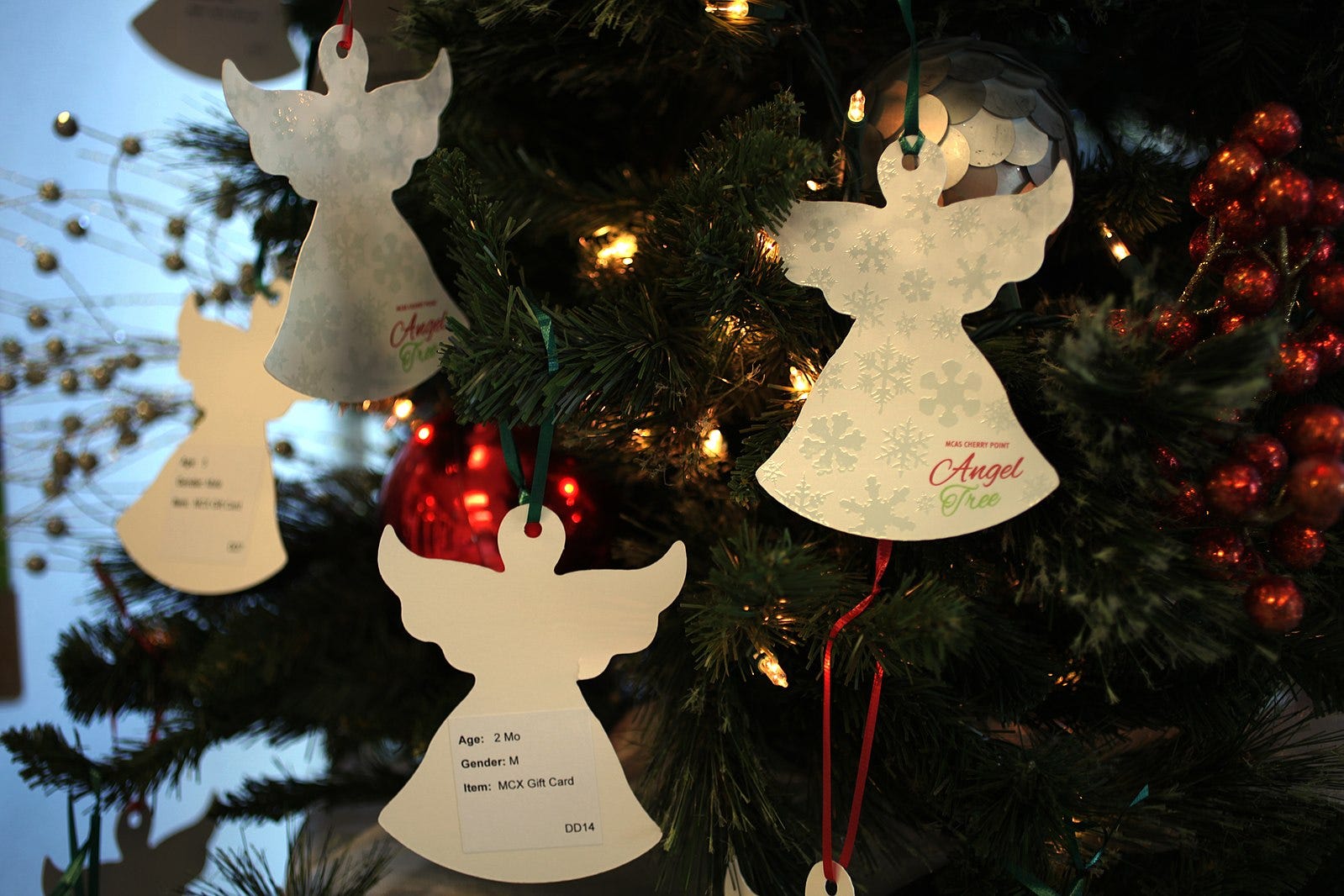
The book club each took extra tags and texted friends. By Black Friday, they rallied more, including me, to buy as many gifts as we could find from the lists. This small moment revealed something powerful: when need is visible, and the path to help is clear, people show up for strangers. It’s exactly the kind of generosity that, when amplified online, can transform how we connect as a nation.
This is the work I do at Shared America, where we design communications campaigns to fight division and strengthen community by inspiring our better angels. Our work is informed by surveys, focus groups, and conversations across the country, and in every forum we keep hearing the same pressures. Families are stretched. Food insecurity is rising along with the price of eggs. Affordable housing and child care are increasingly out of reach. Need is up, and budgets are tight.
Yet here’s what I’ve learned as a digital entrepreneur focused on social impact: in an attention economy that rewards outrage, we have an untapped opportunity. When we make generosity go viral—when we use digital tools to amplify acts of kindness rather than division—we can supercharge the greater good we achieve as a people.
The conventional wisdom says we’re wired for fear and division, that polarization has made connection impossible, that social media is poisoning our culture. Many of us feel it at holiday dinner tables. But I firmly believe that we are also wired for community and connection. The vast majority of Americans long to reconnect around our founding principles of freedom, opportunity, equality, and the rule of law for all.
So how do we “flip the script” and start to use digital tools for good? And the answer lies in understanding what actually spreads online.
A decade of research shows that content evoking high-arousal positive emotion—like awe or inspiration—tends to be shared more than content built on low-arousal emotions like sadness. Witnessing generosity reliably sparks moral elevation, which boosts later prosocial behavior. In plain English: when people see good, they tend to do good. That’s how positive, individual actions can lead to large-scale civic renewal and renovation. It’s the same pattern my mom’s book club demonstrated—just scaled up through digital tools.
The impact is already measurable. On GivingTuesday 2024, Americans donated $3.6 billion—a record—with 36.1 million people participating. It isn’t just money: 12.9 million people donated goods (up 32% year over year) and 9.2M volunteered. The Salvation Army’s Angel Tree reaches over a million children each Christmas, generating hundreds of millions of TikTok likes and engagement that translates into filled gift bags delivered across town. This is digital amplification turning into real-world action, and the values it promotes (kindness, respect, dignity) are precisely the values Americans say they want the country to embody.
You’ve probably seen this play out on social media over the last two holiday seasons. One of my favorite examples this season is a tiny act of humility that turned into a flood of kindness: creator Serena Neel misread a child’s “honey bee stuffy” wish, bought the wrong thing, learned from commenters, and filmed herself going back to fix it. Over 7M views later, her comments section was full of people sharing their own gifting stories inspired by her. In Huntsville, a Salvation Army corps filled over 1,900 Project Angel Tree wish lists in days after viral videos amplified a local newsroom’s posts.
From existing influencers like James Charles to regular moms who go viral, Americans are making generosity the trend and driving real-world action.
I know some roll their eyes at my holiday optimism. I get it. But this isn’t sentimentality; it’s strategy backed by evidence. The platforms are noisy, yes. Still, when we share neighbor norms — “join us,” “we finished this,” “here’s how you can help” — people respond. Charities’ revenue says so. The data says so. The research says so.
We hear constantly about what divides us. But what if the way back to our shared aspirations
isn’t found in grand solutions, but in amplifying the small acts of connection already happening? This holiday season, at a kitchen table in the suburbs of Virginia, a book club proved the model: when need became visible, texts went out, strangers showed up, and gift bags made it across town. That’s the pattern we need to scale — one viral moment, one act of generosity, one connection at a time.
Conor Gaughan is a digital entrepreneur and a leader at Shared America, a new initiative with a distinct plan to take on America’s persistent polarization.
A note from The Renovator: This holiday season, we hope you’ll find ways to bring joy to your friends, family, and neighbors. And if you’re on social media, take a moment to seek out generosity and amplify it, too
.
 | A guest post by
|