

Democratic Capitalism Doesn’t Work Without Democracy
From Malcolm Salter: The Right to Run and the Right to Vote are Both Eroding. There’s a Clear Path to Restoring Them.

Malcolm Salter is the James J. Hill Professor of Business Administration, Emeritus, at Harvard Business School. The is the fourth in a series of columns by Professor Salter on renovating democratic capitalism. These columns were adapted from his book, “The Fading Light of Democratic Capitalism,” which was published by Cambridge University Press in 2024.
We’ve talked about cronyism, but that is only one of the forces that is corroding the system of democratic capitalism that has served the United States so well for so long. The other crisis that we face is restricted suffrage.
As I’ve argued, the capitalist component of democratic capitalism is fast losing its legitimacy as the influence of citizens is crowded out by pervasive cronyism. Similarly, the democratic component of democratic capitalism is losing its ability to represent the will of the people through the electoral process.
The phrase “restricted suffrage” refers to practices that stifle the voices of citizens by limiting prospective candidates’ right to run for office and inhibiting citizens’ right to vote. Practices limiting the right to run for office include restricted primary processes; for democracy to function, every viable candidate should be able to compete, and every election should reflect diverse views. Practices limiting the right to vote include the partisan redesign of voting districts; targeted polling station changes; restrictions on registration drives, same-day registration and early voting; and an absence of guaranteed time off from work to vote.
This series of columns may sometimes seem grim, so let me offer two pieces of genuinely good news. First, several important initiatives to reverse the attacks on suffrage are already under way across the country, so we are not looking at a “startup” renovation here. Second, the cluster of required changes is far less controversial than my anti-cronyism proposals. There is a clear path to making progress.
Across the country, well-organized efforts are building steam:
To eliminate the restrictions on voting detailed above.
To strengthen civic education, such as the “Civic Engagement in Our Democracy” program being introduced throughout Massachusetts by the nonpartisan Partners in Democracy, or the Roadmap to Educating for American Democracy.
To expand initiatives in civic engagement for young adults by offering community leadership programs that equip them with the knowledge and skills necessary to drive change.
To open ballot access to more diverse candidates through open primaries coupled and ranked-choice voting.
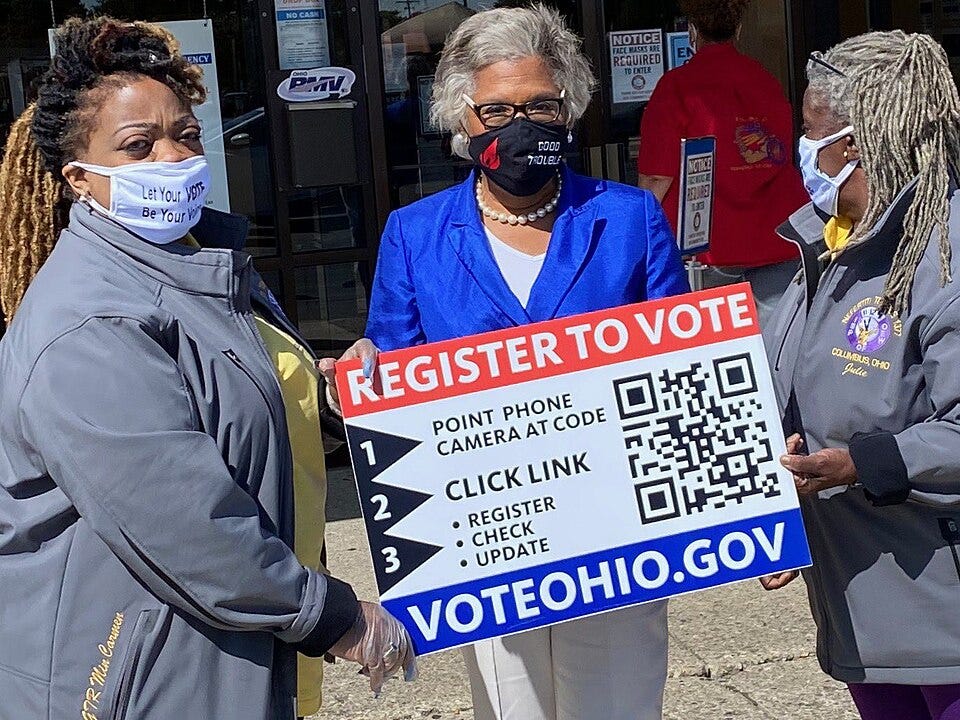

Indeed, it is difficult to come up with fair-minded arguments against ending right-to-vote restrictions, once legitimate concerns for voter fraud have been met. For sure, there are political actors at both the state and federal levels who oppose any element of “central control” that might infringe upon states’ rights to manage their own elections. But the fear – whether real or imagined – that measures designed to increase access could make it easier for ineligible voters to cast ballots is an election administration issue that lends itself to a systematic, nonpartisan examination of the true incidence and causes. Any such good-faith, data-driven effort would be difficult to reject.
Similarly, who can possibility oppose cultivating civic learning about, and adult civic engagement in, our most vital democratic processes, once care is taken to make sure those efforts meet the approval of a cross-ideological, multi-racial coalition?
Why the Status Quo Resists Open Primaries
Ballot access is the higher hill to climb. Our zero-sum political environment seems less conducive to the adoption of open primaries as a way of strengthening voters’ voice and influence. But as Danielle has shown in her columns here at The Renovator, this is the critical election reform for strengthening suffrage.
Consider a state like Massachusetts, with its extremely low level of voter turnout and competition for political office. According to Partners in Democracy, Democrats had primary choices in just 20 percent of state legislative seats in both chambers. Republicans actually had it worse, with a primary choice in just 5 percent of Senate and 1.25 percent of House seats. Those are not numbers indicating a healthy democratic system.
It’s worth spending a moment looking at the arguments against replacing partisan primaries with a single nonpartisan election in which candidates from all parties, including independents, run on one ballot and those who get the most votes move on to a general election using ranked-choice voting. There are four of these, and they focus on maintaining control over candidate selection, preserving party purity, and protecting favored office-holders.
Opponents of open primaries argue that political parties have the right to limit the selection of their nominees to party members, because allowing in non-members would destroy what the party stands for. Relatedly, opponents also argue that allowing non-party candidates into primaries increases the chance that a nominee won’t represent their party’s views, thus weakening the power and influence of that party and its supporters. (This a common position taken by labor unions with strong ties to the Democratic Party.) Opponents further worry about gaming whereby voters from one party might vote for a weaker candidate from another party to get a better chance of winning the general election. Finally, opponents of open primaries express concern about possible voter confusion over runoffs that use ranked-choice voting.
Aside from the last, which can be dealt with through voter education, all of these arguments drive in one direction – protecting a status quo that has ceased to operate in a genuinely democratic fashion. And they are all overcome by the principled argument in favor of open primaries – that they will strengthen suffrage as a democratic ideal and reality.
With open primaries, voters can reclaim the freedom and opportunity to elect officials that best represent their interests. They also give voice and political influence back to the people and, in doing so, invite more citizens to engage in local, state, and national political processes. And, in doing that, they breathe new life into our system of democratic capitalism.
A healthy democracy - and an economy based on democratic capitalism - depend on correcting the corrosive dynamics of restricted suffrage through these types of reform and renovation.
Bringing Business Leaders Into the Cause
So back to the question this series has been building to: How we can encourage business leaders, as leading economic actors in our political economy, to join with advocates of capitalist democracy to address the corrosive effects of restricted suffrage?
A good answer to this question needs to address why business leaders should embrace the idea that their mandate includes serving as informed guardians of our unique governance system as well fiduciaries for their suppliers of capital.
What gives special urgency to this question — and call to action — is the idea (revealed through repeated polling and surveys) that the more the fundamental democratic principle of political equality is integrated into our political economy, the more capitalism is legitimated in the minds of citizens as an ethical social enterprise. Another source of urgency is the knowledge — gained from American experience — that democracy and a market economy can co-exist and prosper together when they are functioning at their highest potential.