

Civic Education News Roundup: the Semiquincentennial, Gen Z Civic Vibe Check, and successes in civil dialogue.

Civic Learning Week (CLW) is a weeklong, high-profile spotlight on the importance of civic learning, engagement, and leadership. The week serves to highlight the importance of civic education in sustaining and strengthening constitutional democracy in the United States by building civic knowledge, skills, and dispositions that provide the foundation for an informed and engaged populace.
The 2026 Civic Learning Week National Forum—co-hosted by iCivics and the Democratic Knowledge Project, and themed Liberty and Learning: Civic Education at 250—will be held in Philadelphia as we celebrate the nation’s semiquincentennial. This year will also see the expansion of the national forum into a two-day event, ensuring educators are part of the conversation and allowing more time for prominent researchers and civic leaders to join educators and students in exploring key topics related to civic education and the leadership needed to make high-quality civic learning a nationwide priority.
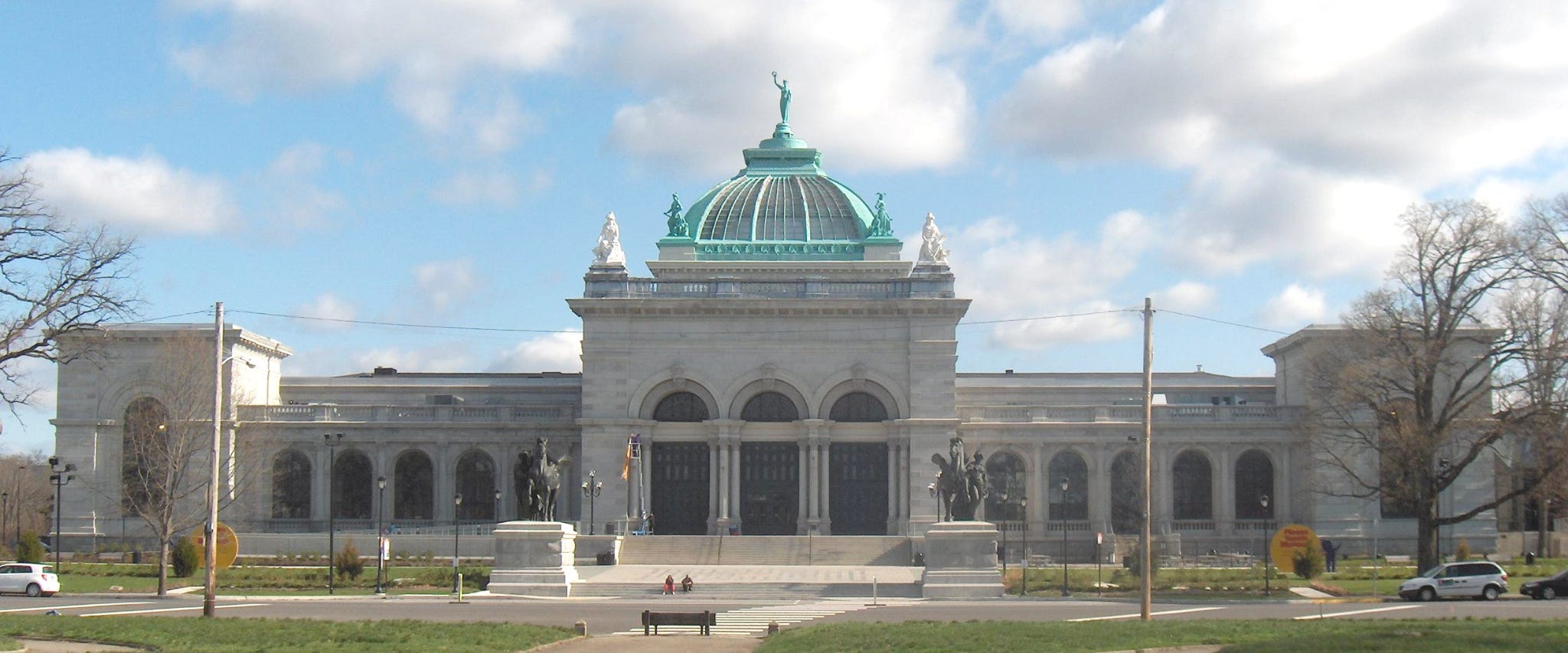
Register for free now! Historian Jill Lepore will deliver the opening keynote. Events include visits to the National Constitution Center, the Museum of the American Revolution, Eastern State Penitentiary, and the Please Touch Museum (one of my favorite Philadelphia buildings, and very appropriate for this event – it’s in Memorial Hall, which was constructed for the 1876 Centennial Exposition!).
The big picture
“When you present general education as this form of education that prepares you for a life of citizenship or a life of engagement with your environment, and when it’s offered not as a replacement for a career-oriented education, but as its foundation, I think it is immediately appealing. And it could help restore credibility to universities.”
(from Bard College’s Roosevelt Montás, interviewed by the Chronicle of Higher Education’s Ian Wilhelm after a conference on revitalizing humanities education at Vanderbilt University)
From the New York Times, read a conversation with Sian Beilock, the president of Dartmouth; Michael Roth, the president of Wesleyan; and Jennifer Mnookin, the chancellor of the University of Wisconsin-Madison: “‘We Lost Our Mission’: Three University Leaders on the Future of Higher Ed.”
And Jill Lepore asks in the New Yorker, reflecting on many of the events we’ve been tracking in these roundups along with Ken Burns’ new documentary: “What Was the American Revolution For? Amid plans to mark the nation’s semiquincentennial, many are asking whether or not the people really do rule, and whether the law is still king.”
A new university deal with the Trump Administration
The Trump administration has reached an agreement with Northwestern University, who will pay $75 million (not an admission of wrongdoing) and adhere to federal anti-discrimination laws (such as excluding trans women from women’s dorms and sports), in exchange for unfreezing federal research dollars. According to the Chicago Sun Times:
[Northwestern] also must implement mandatory antisemitism training for students, faculty and staff; maintain clear policies for protests and expressive activities; review its international admissions practices; and terminate the university’s Deering Meadow agreement with pro-Palestinian protesters that ended an encampment on campus last year. …The Trump administration froze about $790 million in research funding for Northwestern in April amid an Education Department investigation into alleged “widespread antisemitic harassment” at the university. The university announced in July that it was cutting 425 positions, nearly half of which had been vacant, amid the funding freeze.
What does civic education mean to Gen Z?
Gen Z Civic Vibe Check from the Institute for Citizens & Scholars: A new national survey of 1,000 young people aged 14–22, conducted by YPulse, reveals what it takes to engage young people and get them to participate in civic life.
Watch the Gen Z and the Future of Democracy panel discussion from Everyday Democracy, co-sponsored with Civics Unplugged: In this conversation, CEO Merle McGee is joined by two youth organizing leaders who share their perspectives on the diverse challenges and opportunities shaping Gen Z’s role in democracy.
Read Wendy Schaetzel Lesko’s piece about Expanding Youth Civic Engagement Strategies from National Civic League
Stories of success in civil dialogue:
At UNC Chapel Hill, an event hosted by the School of Civic Life and Leadership titled “Reviving Civil Discourse on Campus” drew 240 community members to discuss a documentary about a UNC course called “Courageous Conversations: Israel and Palestine on Campus.” The course even included a trip to Israel and Gaza. Students talked about learning to sit with ambiguity and complexity, and improving their communication and listening skills in the course, and applications for the course have tripled this year.
Reimagining an Upper-level Biology Course Through Deliberation | By Kate LeCroy of Rhodes College, 2024-25 Deliberative Pedagogy Collaborative Faculty Fellow. The Deliberative Pedagogy (DeeP) Faculty Collaborative consists of faculty from Davidson College (home of the Deliberative Citizenship Initiative) and other higher education institutions who are committed to learning and implementing new ways to improve and deepen the quality of their class discussions.
“Over the course of the semester, students became not just consumers of information, but active contributors to our shared process of inquiry. We did this by embedding structured deliberations into our weekly rhythm, and we transformed Wednesday classes into deliberations where students navigated environmental ‘wicked problems’ together.”
Nick Longo talks about the “dialogue walls” he helped to create to help depolarize the community at Providence College, on an episode of Michael Lee’s “When We Disagree” podcast.
What kind of civic education do students need?
Aisha Baiocchi for the Chronicle of Higher Education asks “Schools of Civic Thought Are on the Rise. Are Students Interested?” Two more pieces answer in the affirmative: AEI’s Benjamin and Jenna Storey explain Why Schools of Civic Thought Matter in the City Journal; and George Will, writing for the Washington Post, writes that “These universities are reviving higher education’s civic seriousness.”
In Indiana, “Under newly adopted state requirements, universities must answer whether proposed degree programs exercise a ‘commitment to the core values of American society.’” Responding to this change from the Indiana Commission for Higher Education, AEI fellow Samuel J. Abrams writes that “Indiana’s Push for American Values Is Right—but It Must Strengthen, Not Politicize, Civic Education.”
James Traub, author of the forthcoming book The Cradle of Citizenship: How Schools Can Help Save Democracy, writes for the New York Times: “Trump Made the Citizenship Test Harder. What if Every American Had to Take It?” Many states are using the US Citizenship and Immigration Services (USCIS) test as a summative assessment to pass a civic learning requirement in public K12 education. In August, USCIS made the test more stringent, including in its assessment of moral character: their spokesman explained to Time Magazine that “‘[USCIS] is committed to implementing policies and procedures that root out anti-Americanism.’”
From Greater Good Magazine: “Can We Teach Racial Justice by Talking About Virtues?” A study from Baylor’s Science of Virtues Lab published in The Journal of Positive Psychology shows the positive effect of stories of courage and patience as daily practices.
American Enterprise Institute senior fellow Robert Pondiscio corrects “The Myth of the Anti-American Teacher” and calls for more hope and less existential dread in civic education in a pair of pieces for AEIdeas.
A new publication:
The Children’s and Parent Leadership Training Institute: Lessons from a Mixed Methods Study on Intergenerational Civic Development. By Joanna D. Geller, Wendy Y. Perez, Lisette DeSouza, Matthew A. Diemer, Matthew Truwit, Wendy de los Reyes, and Arianna Jackson from the Center for Policy Research and Evaluation at NYU Metro Center and the University of Michigan Marsal Family School of Education, November 2025.
The Children’s Leadership Training Institute (CLTI) and the Parent Leadership Training Institute (PLTI) provide community-based family civic leadership initiatives for parents/caregivers and their children, ages 3–12. A series of 20 3-hour sessions for children and parents runs in parallel, covering topics such as public speaking, community systems, government, and public policy. This brief reports on 4 years of assessment of these programs.
Upcoming Events:
The Hammel Family Human Rights Initiative at Penn State University is offering self-paced online courses for teachers’ professional development in Teaching Difficult Issues and Using Media to Facilitate Difficult Discussions.
Coalition of Urban and Metropolitan Universities (CUMU) Anchor Learning Network 2026 kick-off: Workforce development and the anchor mission | December 3, 2025 3:00 pm EST – 4:00 pm EST
Info Session: Facing History School & District Programs | Facing History And Ourselves, December 4, 2025
Campus Compact Fall 2025 Coalition Conversations: Navigating Uncertainty in Higher Ed | December 5, 12:00 - 1:00 PM ET
The Alliance for Civics in the Academy will host a monthly webinar. Next up: “Comparative Civics: Beyond Western Civ“ with Dongxian Jiang, Shadi Bartsch, Simon Sihang Luo, and Peter Levine on December 12, 2025, from 9:00-10:00 a.m. PT. You can watch recordings of previous webinars on their website as well, including last month’s: “Out of Many, One: Creating a Pluralistic Framework for Civics in Higher Education.”
Mapping Deportations Curriculum Workshop from the Zinn Education Project, Monday, December 15, 7pm – 8:15pm ET. Join us to learn about “Mapping Deportations” a classroom-friendly digital resources that invites visitors to see the history of U.S. immigration enforcement not as a series of disconnected events, but as a pattern.
ASU Project ACCLaIM: Advancing Civics Curriculum Learning through Instructional Microcredentials focuses on professional development for K–12 teachers in the areas of American history, civics and media literacy via a comprehensive microcredential program. New cohort begins in January.
Winter ‘26 Institute on Teaching Social Action, January 9-11: This three-day virtual institute will introduce faculty and teaching staff to an experiential learning approach in which students develop and launch a social action campaign of their choosing as a part of a course.
The Civic Learning Institute’s next online course, Difficult Conversations in the Classroom, begins January 29th. Learn more and register for Difficult Conversations here. You can also contact CLI to learn about custom workshops!
We the People: National Symposium on Civic Education Research hosted by The Center for Civic Education and the Civic Education Research Lab (CERL), Washington, D.C., March 6–7, 2026