

Civic Education News Roundup: Teaching foreign relations, student leadership in schools, and state-level debates.

As the conflict in Iran continues to spread, I’ve been thinking about questions from the EAD Roadmap’s theme of “A People in the World” pertaining to what the United States ought to do in the name of our “national interest.” The EAD Educator Resources library has plenty of related teaching materials on this theme, but educators have been writing about how to address the current situation in the classroom as well:
Nina Rees, an undersecretary in George W. Bush’s Department of Education, wrote about it from the perspective of an Iranian-American for EdWeek.
In The74, David Noah argues for connecting Iran’s ancient and modern histories,
Faculty at institutions like Seattle University and Princeton are holding teach-ins,
Bryan Alexander moderated a conversation about how the war impacts higher ed on Future Trends Forum, and
Penn State’s Boaz Dvir reflects on how to approach conversations about Iran in the classroom for The Conversation.
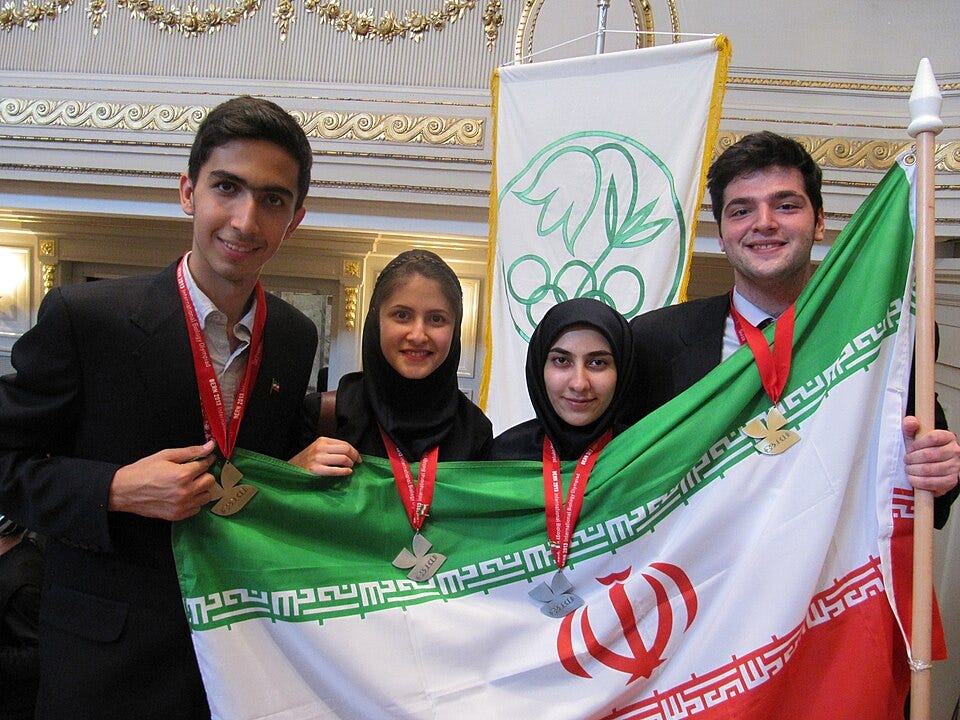
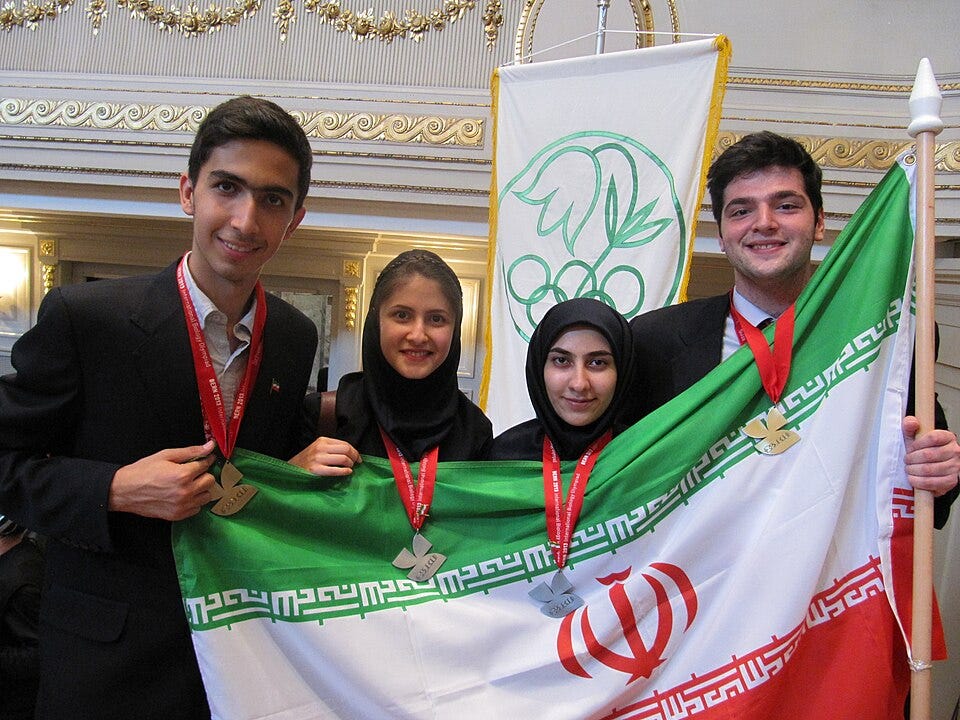
Iranian students win two gold medals and two silver medals at the 24th World Biology Olympiad, Bern, Switzerland. Photo via Wikimedia Commons.
Last week, I wrote about how to give students opportunities to practice civic skills in their own schools, including a great example: Jennifer Chace, PhD’s work with Listening Schools:


And great minds think alike, I guess, because DemocracyNext also posted a piece about student agency in schools!
Why civic learning in schools matters
A Generation Ready To Lead | By Rajiv Vinnakota for Forbes: “A generation ready to lead is already here. The choice is simple: keep them on the sidelines, or invite them in as full partners in building what comes next—and be willing to learn and lead alongside them.”
Higher Education Was Built For Moments Like This | by Kathleen Cole and Robert Glover for the EDU Ledger: “we help prepare a generation not just to navigate a divided democracy, but deepen students’ capacity to participate in it. We help to strengthen democratic life where it still exists and expand it where it doesn’t.”
Educating for Democratic Resilience | by Peter Levine, “on the theory that democracy is more resilient when many people belong to self-governing, autonomous associations.”
Debate hosted by Pepperdine: Are Schools Failing at Civic Education – And is That Driving Today’s Political Divide? ‘Ignorance does not produce neutrality, it produces distortion’ | By Katy Grimes for the California Globe
America’s Civics Gap Isn’t Just What Students Know. It’s How They Engage. What does it take to prepare Americans to participate meaningfully in their democracy? Experts examine how civic education can help cultivate knowledge, judgment, and civic virtue—starting at a young age. | By Natalie Ermann Russell for UVA’s Karsh Institute on the relationship between civic thought and experiential learning
A write-up of The Fund for American Studies’ (TFAS) annual conference, Developing Courageous Citizens: Revitalizing Civic Education and America’s Founding Principles, by Frank Filocomo for the RealClear Foundation: Civic Education, Civil Society, and Americanism
What Is Civic Hope? And Why Should Schools Care About It? | By Rick Hess in conversation with Ashley Berner, the director of the Johns Hopkins Institute for Education Policy for EdWeek, March 17: “A realistic, future-focused disposition supports democratic behaviors like voting, writing elected officials, and supporting a peaceful transfer of power. Cynicism and despair don’t. Neither does ideological outrage.”
Higher Ed’s Role In Protecting Youth Voting Rights And Democracy | By Yael Bromberg, Jonathan Becker, and Civic Nation for Forbes
Strengthening our Democracy Starts in the Classroom: Facing History & Ourselves President & CEO Desmond K. Blackburn, PhD reflects on what school and district leaders can do to prioritize civic education.
Thoughts on America at 250:
The real revolution is not giving up on democracy — or on each other: As we approach the Semiquincentennial, there are lessons from the founders we can heed going forward right now. | by Kerry Sautner for The Philadelphia Inquirer
America at 250: Patriotic Lament From Her Darker Sons | Rev. Dr. F. Willis Johnson for The Fulcrum
Q&A with Madison Center for Civic Engagement’s Kara Dillard: Through a series of events, discussions and community partnerships, JMU’s VA250 programming connects the state’s founding history to conversations about civic participation today.
What Does the Declaration of Independence Declare? | Lecture by Dr. Roosevelt Montás, John and Margaret Bard Professor in Liberal Education and Civic Life at Bard College, for the the Moynihan Center at CCNY in partnership with the Jack Miller Center
Civic education in the states:
Why civics education matters for CT students | by State Rep. Kevin Brown and Kristina Pires for the Connecticut Mirror
“As our nation approaches its 250th anniversary in 2026, the America 250 CT Commission has called for a renewal of civic engagement and democracy. The State Seal of Civics Education and Engagement, which Connecticut Gov. Ned Lamont signed this week, provides a tangible, lasting legacy for this milestone year.”
California’s civic seal is growing. Now we must expand access. | By Robert Medrano and Jenifer Crawford for The Fulcrum
How to deepen California’s commitment to K-12 civic learning | by Erica Hodgin for EdSource
In Florida schools, a debate unfolds: What does ‘civics’ mean in 2026? Gov. Ron DeSantis and some districts see civic education one way. Students think they’re missing core American principles. | by Jeffrey S. Solochek for the Tampa Bay Times
In Page School, WA teens get an up-close education in policymaking | by Sophia Sostrin for the Seattle Times
Minnesota students advocate for Civic Seal to boost media literacy: A proposal before the Legislature would create a graduation credential for teens who receive civics instruction in five areas, including media literacy. | Minnesota Star Tribune
When Kansas City families learn civics together, democracy gets a boost | Opinion By Joanna Geller and Julie Holland for the Kansas City Star about CLTI, the Children’s Leadership Training Institute (for children ages 3-12 years old), and PLTI, the Parent Leadership Training Institute
State Conference at Rutgers Highlights Civic Participation Ahead of Nation’s 250th Anniversary: this year’s CivicsNJ symposium featured speakers from Monticello, iCivics, and New Jersey’s state government as well as student leaders.
Civic learning resources and opportunities:
Civic Values: Learning About Them, Living Them. Using Civic Profile, an interactive tool, Americans can better understand themselves and their communities—and perhaps build bridges. An interview with Chester Finn, Jr. from Stanford’s Hoover Institution.
The Revolutionary Lives of Catharine Macaulay and Mercy Otis Warren | We the People podcast episode from the National Constitution Center featuring Mary Sarah Bilder of Boston College Law School and Sara Georgini of the Massachusetts Historical Society
Wesleyan University is offering a new course to high school students through its partnership with National Education Opportunity Network (NEON), a nonprofit that facilitates the teaching of college-level courses to low-income high school students nationwide. The course, called “Civics, Citizenship, and the American Imagination,” is taught by Khalilah Brown-Dean, the Rob Rosenthal Distinguished Professor of Civic Engagement, with the support of 15 Wesleyan student teaching fellows.
Student Leaders Turning Advocacy into Action | from the Children’s Defense Fund, March 5, about the Black Student Leadership Network
Democracy House is accepting applications until April 19: The Young Leaders Summer Institute (YLSI) is a civic education program for young people ages 18-23, designed to prepare rising generations to defend, strengthen and improve democracy. Over the course of the program, for about 3-5 hours per week, YLSI Fellows learn about threats to democracy, discuss global and historic democratic contexts, and develop their civic leadership skills.
Shake The Future Up hopes to shake up the polls with increased youth voter registrations | By Lizeth Tello for Solving Sacramento
New publications:
Edward Brooks and Michael Lamb. “Ten Reasons Why Colleges and Universities Should Educate Character.” Journal of Moral Education.
Ask Every Student Impact Report:
“While specific strategies can vary in effectiveness based on the size and type of campus, capacity building strategies such as Hiring Student Leaders, Building Inclusive Coalitions, and Building Institutional Partnerships consistently produced higher voter registration numbers when compared to campuses with similar enrollment numbers. When it comes to direct AES voter registration strategies, Academic Integration strategies such as Class Visits and Faculty Champions consistently produced higher voter registration rates.”
The Power of Youth Service: How Service Empowers Young People from Gallup
“A nationally representative survey of more than 3,000 U.S. youth ages 12-25, conducted by The Allstate Foundation and Gallup, finds that youth service is linked to positive outcomes in the areas of career readiness, connection and resilience.
“Eighty-two percent of youth say they have participated in at least some form of service. Youth who serve report feeling prepared for a future career, connected to their community and able to handle whatever comes their way, with the greatest benefits seen among those who engage deeply or take on leadership roles.”
Webinar recording: Measuring What Matters: Using Data and Storytelling to Demonstrate Civic Impact | Partners for Campus-Community Engagement (PCCE)
Forthcoming in May: Teaching America: Reflective Patriotism in Schools, College, and Culture by Paul Carrese for Cambridge University Press.
Upcoming Events:
We Hold These Truths with Monticello’s Dr. Jane Kamensky | webinar from UNUM and the Village Square, Tuesday, March 31, 2026 @ 7:00 pm
The Roadmap to Educating for American Democracy: Making K-12 History and Civic Learning Meaningful | Civic Learning Institute course, April 7-May 5
Webinar organised by the Global Cooperation for the Democratic Mission of Higher Education: Global Solidarity, Learning, and Action to Renew Higher Education’s Democratic and Civic Mission | 9 April 2026, (9:00-10:30 AM EST / 3:00-4:30 PM CET)
Civics in Higher Education: A National Summit hosted by The Jonathan M. Tisch College of Civic Life at Tufts University and the Alliance for Civics in the Academy (ACA) on Friday, April 10, 2026 from 9:00 a.m. to 4:00 p.m. on Tufts University’s Medford/Somerville campus.
The Civic Learning and Democracy Engagement (CLDE) Coalition will host a virtual forum on April 13, 2026, 3:30-5:15 PM Eastern to celebrate the release of For ALL College Students: The CLDE Guide for Generative Curriculum Planning.
What It Means to Be an American — and What It Requires of Us at This Moment | ASU+GSV Summit 2026 (San Diego) panel featuring Eboo Patel (Interfaith America), Ellen Dollarhide McCoy (Ronald Reagan Institute), Eric Liu (Citizen University), and Louise Dubé (iCivics), Monday, April 13, 2026, 2:10 pm-2:45 pm
Deepening Civic Learning through Community Connections | Civic Learning Institute Workshop, Wednesday, April 15, 7:30-9pm
Purpose in Practice: Community-Engaged Teaching Across the Curriculum | California State University online conference, Fri, Apr 17, 2026 2:30 PM - 3:50 PM EDT
National Youth Leadership Council (NYLC) Service-Learning Symposium: Uniting for Good: A Virtual Gathering, April 22, 10 AM – 4 PM CDT
Standing Up to Bigotry and Hate: Tools for Young People in a Complex World | Facing History and Ourselves, April 29, 7:00 pm to 8:00 pm EDT