

Civic Education News Roundup: An investigation into student voting data and gearing up for Civic Learning Week

I’m at the Civic Learning Week National Forum in Philadelphia next week – come say hello if you’re here, follow my Substack notes, or join the livestream! And check out the Civic Learning Week website for lots of great events around the country.
An investigation into student voting data
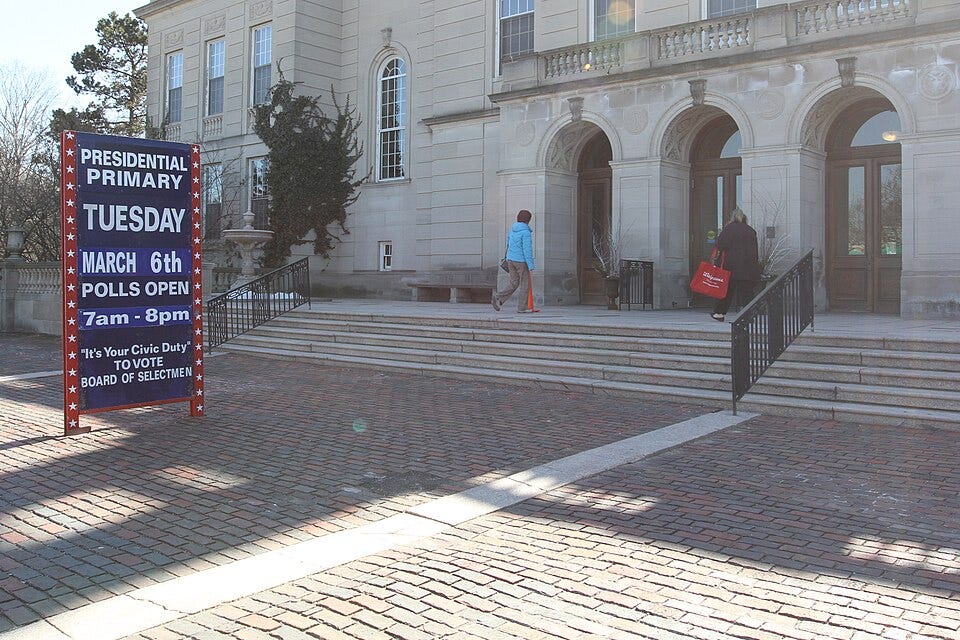
The U.S. Department of Education sent a Dear Colleagues Letter to presidents of institutions of higher education on February 5 about data on student voting rates from the National Study of Learning, Voting, and Engagement (NSLVE). DOE advises that:
“Institutions intending to utilize any NSLVE report or data this year are advised to wait to do so until the Department has completed its investigations into Tufts University and the National Student Clearinghouse. Any IHE that utilizes NSLVE data released in 2026 could be at risk of being found in violation of FERPA.”
The Chronicle of Higher Education reported that the National Student Clearinghouse cut ties with NSLVE as a result.
Ryan Quinn covered the letter for Inside Higher Ed, the Tufts Daily covered the university’s response, and the Alliance for Higher Education published guidance and talking points in response. Amanda Fuchs Miller, who served in President Biden’s DoE, criticizes the move in Inside Higher Ed.
.jpg)
New civic learning resources:
More Perfect has launched In Pursuit, a landmark initiative celebrating America’s 250th anniversary. This Substack will serve as a digital home for a year-long exploration of leadership, character, and the American Experiment. Each week throughout 2026, they will publish original essays from some of the nation’s most prominent voices—including former Presidents, First Ladies, and leading historians—as they reflect on the enduring lessons and complex legacies of those who have occupied the White House. Check out Danielle Allen’s post on John Adams from last week! CEO Colleen Shogan also spoke to CSPAN about the project.
The Urban Libraries Council launches the The Civic Makers Lab, a grant and peer-learning program that equips librarians to serve as civic learning facilitators, and empowers young adults ages 18-24 to be active contributors to their communities. Through experiential civic learning (the process of acquiring civic knowledge and skills through action), libraries will build new pathways for young adults into civic life, rooted in curiosity, connection, and community problem-solving, rather than partisanship. Application due today!
Eric Liu and Citizen University publish Power Walk: A Field Guide. Want to make change happen in your neighborhood? Start by taking a walk. Citizen University’s Power Walk Field Guide is an activity designed to help you look closer, notice more, and ask some new questions about the place you live.
Bad Bunny and the All-American Culture of Halftime | A Project Look Sharp media literacy activity.
The National Constitution Center offers a new free course on civic virtues: What the Founders Meant by Happiness: A Journey Through Virtue and Character. Online and self-paced, open to anyone! And you can check out the video of their recent town hall: Thomas Paine and the 250th Anniversary of Common Sense, featuring Gary Berton, the president of The Thomas Paine Historical Association, and Scott Cleary, co-editor of New Directions in Thomas Paine Studies and author of The Field of Imagination: Thomas Paine and Eighteenth-Century Poetry.
Cato’s Sphere Education Initiatives: Igniting Curiosity and Civil Discourse in the Classroom. Teachers from Massachusetts, North Carolina, and Colorado, all in the Sphere network, spoke to Free Society about the challenges of teaching in 2026 and how they are promoting civic culture. | By Josh Hardman for the Cato Institute.
On PBS NewsHour, Norah O’Donnell spotlights overlooked women who shaped U.S. history in We the Women.
And some great talks to check out:
From the Harvard Kennedy School Ash Center podcast Terms of Engagement, co-hosts Archon Fung and Stephen Richer invite democracy and civil rights advocate Cornell William Brooks to assess the evolution of America’s historical narrative and what implications history has on our contemporary political context: How Does Our Civil Rights History Shape the Future of American Democracy? And Amanda Litman joins the podcast to talk about why she believes democracy needs a generational makeover and to discuss her recent book, When We’re in Charge: The Next Generation’s Guide for Leadership: What If Millennials and Gen Z Leaders Replaced the Gerontocracy?
Annmarie Caño, author of the new book Leading Toward Liberation: How to Build Cultures of Thriving in Higher Education (Johns Hopkins University Press), spoke to Bryan Alexander on the Future Trends Forum about how higher education can help faculty, staff, and students thrive
Peter Levine recaps a recent talk at Tufts on his blog: The USA at 250: constitutional crisis.
Students, tech, and democracy
From Civics of Technology, ideas for how to conduct a classroom Technology Audit to help students reflect on the efficacy, ethics, and biases of the tech tools they use every day.
From the Knowledge Matters Campaign, the new History Matters Review Tool: A Vision for Creating High-Quality K-5 History Curriculum. “The History Matters Review Tool describes the core features of a comprehensive elementary social studies curriculum: sequenced knowledge building, inquiry-based learning, text-grounded discussion, and writing that develops both historical understanding and literacy. It is modeled on the highly regarded Knowledge Matters Review Tool for ELA curricula.”
Media Literacy That Moves the Needle: Findings from Project Community | by Civic Education Research Lab and Patrick McSweeney, February 26, 2026, with a link to the full report on the pilot of the Project Community curriculum.
From The74, Social Media Is Toxic When It Comes to Tough Issues. Schools Can Help Kids Cope. Katz & Levine: 3 ways teachers can encourage students to talk through uncomfortable differences, think, listen and connect with ideas and one another.
Three articles about the Gen-Z changemakers around the globe who are leading powerful democratic movements:
Gen Z, Guardians of Democracy: Protests have led to possibility in at least three spots around the globe. | by Emma Varvaloucas for The Progress Network, February 19, 2026
Young People Are Fed Up, But They’re the Best Hope for Reviving Democracy | by Scott Warren for Democracy Without Exception, February 19, 2026
Small, approachable actions are the key to a nonprofit push for greater civic engagement among Gen Z | An article for AP News featuring the newly rebranded C&S, formerly the Institute for Citizens & Scholars - you can also check out an interview with President Rajiv Vinnakota on the Future Hindsight podcast
And a recap of Youth250: Our Declaration, an event hosted by MadeByUs:
What Gen Z Is Declaring at America’s 250th: Insights from young adults from across the U.S. at Youth250: Our Declaration. | by Alex Edgar for Can We Talk? It's Gen Z, Feb 26, 2026 - you can also check out the video recap of the event on Youtube.
The Wall Street Journal explores the politics of civil dialogue initiatives in higher ed:
These Schools Want Civil Discourse on Campus. Even That Is Up for Dispute. New programs aimed at reforming campus culture have drawn scrutiny from skeptical professors, administrators and students who see them as a conservative takeover. | By Pamela Paul for the Wall Street Journal, Feb. 20, 2026.
New publications:
Viewpoint Diversity: What It Is, Why We Need It, and How to Get It, co-edited by John Tomasi & Bernard Schweizer for Heresy Press, with a chapter by Danielle Allen on “How to Be a Confident Pluralist”
From Conflict to Conversation: Restoring Civic Trust in Divided School Communities | by Melinda Burrell, D.G. Mawn, and Becca Kearl for the National Civic Review, Winter 2026: As school districts across the country continue to navigate divisive issues, a new model for facilitating productive conversations starts with being vulnerable, admitting we do not have all the answers, and being willing to listen and change.
Exploring Equitable Community–Campus Relationships | Edited by Karla Bird, Suchitra V. Gururaj, Sara B. Moore, Andrea Robles, and Cindy Vincent Claar, co-published by AAC&U and Routledge.
From the Brookings Institute, A new direction for students in an AI world: Prosper, Prepare, Protect. “A yearlong study by the Center for Universal Education at the Brookings Institution finds that, given the current trajectory of generative artificial intelligence (AI) and its implementation and use, the potential risks to students overshadow the benefits. But it’s not too late to bend the arc of AI use to enrich, rather than diminish, student learning and development”, including social and civic development.
Campus Speech and Academic Freedom: A Guide for Difficult Times by Erwin Chemerinsky and Howard Gillman for Yale University Press.
We the People: Pluralism in Real Life (Toolkit) | By Chris Walsh (Director, Freedom and Democracy) and William McKenzie (Senior Editorial Advisor), George W. Bush Institute, February 25, 2026 - 9 principles of American pluralism for organizations, businesses, and communities.
The College Reality Check: What Students Experience vs. What America Believes report from Lumina Foundation and Gallup: 70% of college students agree they can express their opinions freely on campus.
Upcoming Events:
How Can Universities Strengthen Civic Education in K–12 Schools? From the Alliance For Civics in the Academy webinar series, featuring Jennifer McNabb, Joshua Dunn, Meira Levinson, and Jenna Storey on March 4, 2026, 1pm Eastern
Teaching Through Dialogue: Perspectives on Curiosity, Connection, and Critical Thinking | Constructive Dialogue Institute, Mar 4, 2026 3:00 PM - 4:00 PM EST
ALL IN Campus Democracy Challenge Action Planning Virtual Workshop, Wednesday, March 11 at 2 PM ET
America 250: Engaging Students with History, Media & Civic Voice - Discover classroom-ready civics resources to support teaching the America 250th anniversary in this fast-paced virtual resource sharing session. | Facing History and Ourselves, March 11, 7:00 pm to 8:00 pm EDT
“I Had to Stand Up for My Rights”: the Fourth Amendment and Mapp v. Ohio: Explore the 1961 Supreme Court case that redefined the rights of the accused and was based on the search and seizure provisions of the Constitution’s Fourth Amendment. | Annenberg Classroom & New York Historical webinar, Wednesday, March 11, 6 – 7 pm ET
Teaching Elementary Students to Have Effective Discussions | Civic Learning Institute Workshop, Thursday, March 19, 7:30-9pm
Meaningful Civic Assessment: Bring Data Together to Tell Our Stories | Voter Friendly Campus webinar, March 23, 1:00 PM - 02:00 PM ET
Civics Beyond Borders: Fostering Civic Skills for Democracy in a Global Age | online forum from Retro Report and CFR Education for secondary and postsecondary educators, Wednesday, March 25, 3:00-4:00 P.M. (EDT)
Teach the Declaration’s Global Impact Using Media and Artifacts | PBS LearningMedia and the Museum of the American Revolution, March 25 from 7-8 p.m.
Strategies for Building a Community of Care & Belonging | Facing History and Ourselves, March 26, 7:00 pm to 8:30 pm EDT
Forecast Public Art 2026 Series: Creative Power, Civic Purpose: How Artists Strengthen Democracy. The second webinar in this series, Knowledge Is Power: Demystifying Civic Systems Through Creative Practice, is scheduled for Thursday, March 26 · 12–1:30 PM CT: How artists restore civic understanding, expand public access to complex systems like budgeting and voting, and increase community engagement in democratic processes.
Engage Students Through Simulation: A Practical Guide with CFR Education | Council on Foreign Relations, Monday, March 30, 2026, 11:00 a.m. to 12:00 p.m. (EDT)
The Roadmap to Educating for American Democracy: Making K-12 History and Civic Learning Meaningful | Civic Learning Institute course, April 7-May 5
Civics in Higher Education: A National Summit hosted by The Jonathan M. Tisch College of Civic Life at Tufts University and the Alliance for Civics in the Academy (ACA) on Friday, April 10, 2026 from 9:00 a.m. to 4:00 p.m. on Tufts University’s Medford/Somerville campus.