

Citizens United Supercharged: Our Problem with Cronyism
By Malcolm Salter: There can’t be democratic capitalism without political equality.

Malcolm Salter is the James J. Hill Professor of Business Administration, Emeritus, at Harvard Business School. This is the third in a series of columns by Professor Salter on renovating democratic capitalism. These columns were adapted from his book, The Fading Light of Democratic Capitalism, published by Cambridge University Press in 2024.
In the first two columns in this series (read 1 and 2), I’ve described the dangerous downward spiral of democratic capitalism, which raises the urgent question: How do we reverse course? Stemming the decline of democratic capitalism requires, first and foremost, an unambiguous commitment to political equality.
From our nation’s very beginning, our Founders understood that equality was the key to a lived democracy — that no activity claiming to be democratic can actually be democratic unless the principle of political equality is baked into it.
What do we mean by political equality? In Renovator founder Danielle Allen’s excellent framing, the fundamental components are personal autonomy; freedom from domination by other individuals or groups in building one’s life; access to the political process; and the right of members of institutions in civil society to participate in matters affecting their welfare.
Political equality should not be confused with economic equality, social equality, or gender equality, although each of these is important. The word “political” in the phrase “political equality” refers specifically to access to a governance system where the divergent interests of participating parties can be worked out.
As Danielle notes, there are two faces to our governance system: One face is the conduct of governing bodies themselves, whether in the public or private sector. The other relates to citizens – their standing and freedoms within these governing bodies as they participate in aspects of governance that affect their lives.
Political equality is a central feature of American constitutional theory. As pointed out by Jeffrey Clements, founder of the advocacy group American Promise, the principle of political equality has been affirmed in a succession of court cases (think Brown v. Board of Education) and legislation (the Voting Rights Act of 1965) as a foundation of American liberty — but there is still a large and corrosive gap between theory and practice when it comes to campaign finance.
Cronyism and Citizens United
There is no clearer example of the adverse effects of declining political equality in the United States than pervasive cronyism. Cronyism, readers will remember, diminishes the democratic aspect of democratic capitalism by tilting our governance system inexorably in favor of the powerful and connected, as is happening now. To restore some semblance of equality in our political economy, four changes — all of them aimed at addressing the problem of pervasive cronyism — are required:
Reforms in campaign finance laws — including alternate campaign financing schemes that allow candidates to free themselves from large, controlling donors.
Federally mandated disclosure requirements of Super PAC donors to eliminate the massive presence of dark money in electoral campaigns, congressional lobbying, and ballot initiatives.
Greater transparency in corporate reporting of campaign and lobbying spending so the public can better monitor the flow of influence in congressional and regulatory affairs.
And nullification of the Supreme Court’s democracy-destroying Citizens United decision by passing the proposed 28th amendment to the Constitution.
Each of these imperatives deserves its own, detailed discussion. But reversing the Supreme Court’s decision in Citizens United v. Federal Election Commission would have the greatest immediate impact on curbing cronyism and restoring a modicum of political equality to our democracy.
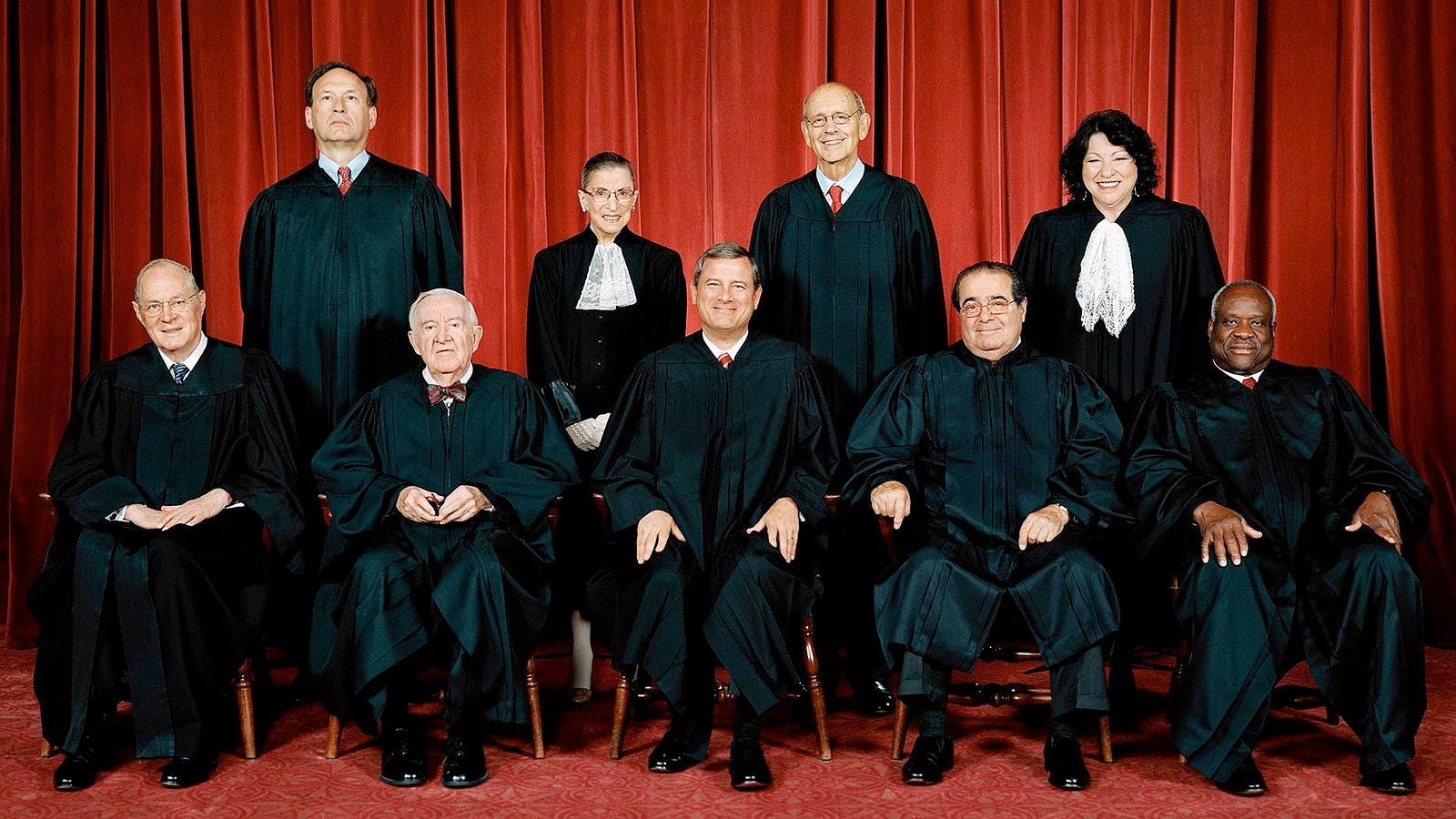
When, in its 2010 ruling, the Supreme Court declared unconstitutional a federal law prohibiting corporations and unions from making expenditures in connection with federal elections, it had the ultimate effect of limiting political equality — by limiting the right of all persons, whether wealthy or not, to participate in the political process on equal terms.
Here’s how and why:
In the wake of Citizens United, the path was cleared for individuals and corporations to contribute unlimited amounts of money, mostly undisclosed, to pay for ads and other communications supporting or opposing individual candidates, as long as they were not working with campaigns and political parties. Unsurprisingly, within two years of the decision, about 85 percent of funding for congressional campaigns came from large contributors — mainly wealthy individuals and corporations. This had the effect — deadly for political equality — of crowding out the voices and influence of average Americans.
.jpg)
To make matters worse, this Supreme Court decision led to the creation of Super PACs that, according to the Brennan Center for Justice at New York University, “empower the wealthiest donors, and the expansion of dark money through shadowy nonprofits that don’t disclose their donors.”
Whereas traditional political action committees are limited to raising a maximum of $3,300 per year per candidate per election, Super PACs can accept unlimited contributions from individuals and corporations. Super PACs do have some disclosure requirements, but because many of these donors contribute through groups that are difficult to identify, the original source of donations — referred to as “dark money”— is often unclear.
For all these reasons, Citizens United has become the major inhibitor of political equality in American democracy. Referring specifically to the post-Citizens United rise of Super PACs, constitutional scholar Lawrence Lessig has concluded that “the only voices that our government listens to are the special interests who fund their campaigns,” resulting in a system of economic and political governance that is “rigged to favor the powerful and the well-connected.” That’s a system that has moved far away from the political equality the founders viewed as so essential to lived democracy.
So it should be no surprise that there is a movement afloat in Congress, driven mainly by Democrats with a few Republican colleagues, to tighten disclosure requirements for Super PAC donations and, more broadly, to take Citizens United off the books through constitutional amendment.
The Work for an Amendment
The push for a constitutional amendment to undo the damage to political equality caused by Citizens United faces a high hurdle — even though more than 75 percent of Americans appear to favor such an amendment. Amending the U.S. Constitution requires two supermajority votes: a two-thirds vote in both the House and Senate, and ratification by three-quarters of state legislatures. But no proposed amendments have come close to clearing this bar in recent decades. The Constitution appears to have become increasingly unamendable as our politics have become more polarized.
Increasingly, yes, but not impossibly. Jeffrey Clements’s nonpartisan group American Promise has shown substantial progress in building a movement for constitutional reform through a full range of civic actions: by recruiting proselytizing volunteers, signing petitions, gathering ballot signatures, voting on resolutions, visiting representatives, presenting to civic organizations, writing letters to the editor, commenting on social media, setting up tables at farmers’ markets, and so on. As a result, over the past 10 years, the legislatures of 23 states have passed bipartisan “ready to ratify” resolutions calling for an amendment to the U.S. Constitution that would provide states with authority to regulate campaign financing.
On the congressional side, amendments were re-introduced in 2025 in both the Senate and House of Representatives that would reverse the Supreme Court decision declaring that corporations were entities with many of the same constitutional rights as human beings and that money spent in elections is equivalent to First Amendment-protected free speech. The proposed amendments would also mandate that federal, state, and local governments require that all political contributions and expenditures be publicly disclosed.
But the big guns of democratic capitalism remain silent on the sidelines.
I know of no CEO or business organization that has publicly called for repeal of Citizens United. Without the support of a critical mass of business leaders for putting democracy back into democratic capitalism as a national ideal, it will be difficult for core democratic principles — like political equality — to be re-embedded into our system of economic and political governance. For the same reason, it will be impossible to curb such democracy-destroying practices as pervasive cronyism. It’s time for business leaders to take a stand.
The same can be said for the issues surrounding lobbying, which is of course protected by the Constitution. In this instance, the focus is on further disclosure requirements for lobbyists’ activities, something that the business community generally rejects in the face of increasing calls for reform. But without some pushing by business leaders, it is doubtful that any meaningful change will happen.
I will return to this conundrum in a further column in this series, where I address the question of why business leaders should think of themselves as guardians for the survival of democratic capitalism. But first, I will talk about how to fight back against restricted suffrage.