

10 Reasons to Celebrate the U.S. Constitution Today
Happy Constitution Day from the Editorial Board!
1. It was built for the long haul.
No other country in the world has a written constitution as old as ours that’s still in use. Our system of checks and balances has given us a strong foundation as a society.
2. It was written democratically.
We all know how hard group projects are, but in 1787 the delegates to the Constitutional Convention committed to deliberating together and building consensus over the best way to turn shared principles into a system of government. No one delegate got exactly what he wanted, but that’s not what was important: What was important was arriving at the best solution democratically by getting contributions from all the participants. Leading up to the signing on this day in 1787, Benjamin Franklin told the delegates:
When you assemble a number of men to have the advantage of their joint wisdom, you inevitably assemble with those men, all their prejudices, their passions, their errors of opinion, their local interests, and their selfish views. From such an assembly can a perfect production be expected? It therefore astonishes me, Sir, to find this system approaching so near to perfection as it does; …Thus I consent, Sir, to this Constitution because I expect no better, and because I am not sure, that it is not the best. The opinions I have had of its errors, I sacrifice to the public good.
3. It was ratified democratically.
After the Constitutional Convention delegates signed the document they produced, it was up to each state to elect a Ratification Convention that would debate whether or not to ratify the Constitution – that is, each state went through its own democratic process to decide whether or not they were going to agree to follow the system laid out in the Constitution. Newspapers all over the country published essays to persuade the public to vote one way or the other – the Federalist Papers by James Madison, Alexander Hamilton, and John Jay defending the Constitution are the most famous examples today, but there were also plenty of counter-arguments published by Anti-Federalists.
4. It borrows good ideas from free societies throughout history.
From the ancient Greek “mixed constitution” and the ideals described by Enlightenment thinkers to real 18th-century republics in the Netherlands and Switzerland, James Madison and his contemporaries did a real deep dive into lessons from history and philosophy. They took inspiration from the good, and designed ways to avoid the bad. John Adams wrote in 1776:
“It has been the Will of Heaven, that We should be thrown into Existence at a Period, when the greatest Philosophers and Lawgivers of Antiquity would have wished to have lived: a Period, when a Coincidence of Circumstances, without Example, has afforded to thirteen Colonies at once an opportunity, of beginning Government anew from the Foundation and building as they choose. How few of the human Race, have ever had an opportunity of choosing a System of Government for themselves and their Children? How few have ever had any Thing more of Choice in Government, than in Climate?”
5. It protects our rights.
The United States’ founders had plenty of experience of violations of the freedom of religion, the freedom of speech, and the freedom of assembly. They’d seen governments seize people’s property, force citizens to house soldiers in wartime, deny citizens access to a fair legal process, and use cruel and unusual punishment on citizens. They added the first ten amendments, the Bill of Rights, to the Constitution during the ratification process to protect Americans from violations that continue to be perpetrated around the world.
6. It’s gotten better with age.
Our Constitution includes the right to change or amend it, and we’ve used that power to improve it over time. Any living thing must be able to adapt to changing conditions while still remaining essentially itself – must balance conservation and progress. The Constitution was designed to be durable, yet malleable; strong, yet flexible. This combination is what’s allowed it to survive so long, and (hopefully) to continue to adapt in the 21st century.
7. It’s provided a powerful model for other countries.
As countries like Poland, Mexico, Germany, South Africa, China, the Philippines, and Nigeria have modernized and reformed their governments, they looked to the U.S. Constitution for good ideas.
8. It helped to inspire movements to better protect civil rights.
In the 1950s and 1960s, Freedom Schools and Civil Rights movement leaders helped Black voters to learn to read the text of the U.S. Constitution and the constitutions of their states, so that they would know their rights.
9. It gives us a sense of the sacred.
Democracy works best when citizens share something sacred, and treat democracy itself as a sort of “civil religion.” As sociologist Robert Bellah notes in his 1967 article “Civil Religion in America,” the Constitution is an essential totem of the American civil religion – one of our core “sacred” texts, a scripture that lays out the principles we share.
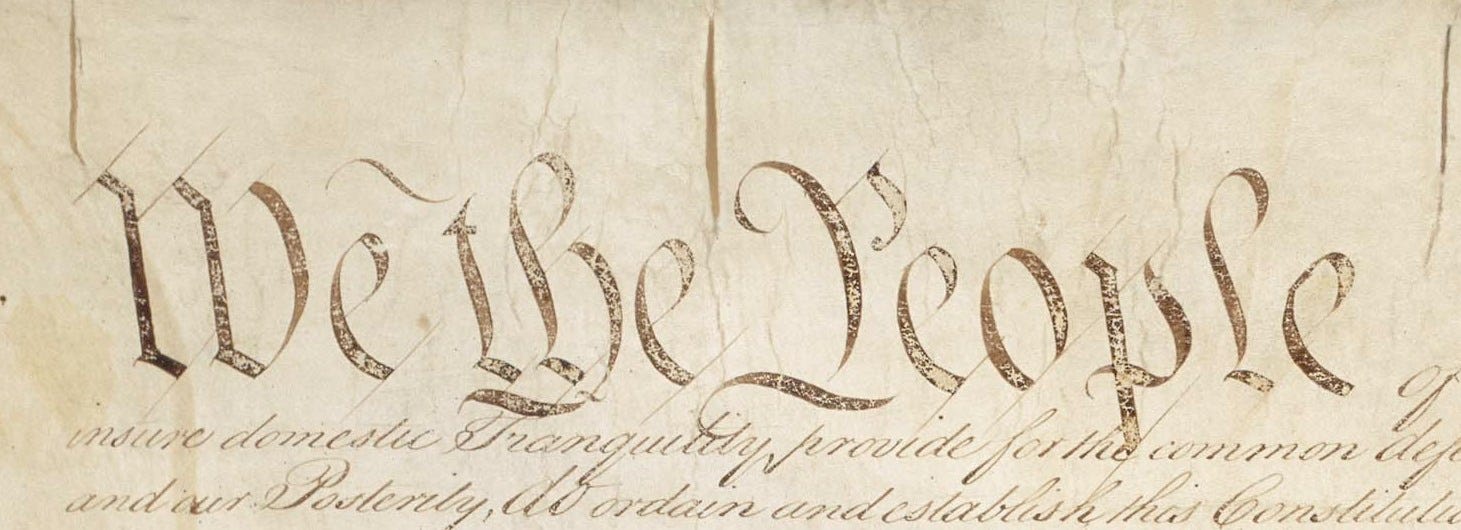
10. It brings together “We the People.”
Some people call it “patriotism,” and some prefer to call it “solidarity.” Whichever word you use, it captures a feeling of our attachment and responsibility to our shared project of self-government, a feeling that unites and connects us.